Évènements passés
Archives du calendrier
-
Stefan Gosepath (Freie Universität Berlin) @ Salle 309 et par zoom
12 h 00 – 13 h 15

Les membres du CRÉ sont heureux d’accueillir Stefan Gosepath (Freie Universität Berlin), qui nous offrira une présentation intitulée « What, if anything, is wrong with bequest? »
Pour y participer par Zoom, c’est ici.
Résumé
This talk is concerned with the question of whether or not it is just that people inherit property. Should an owner, while alive, be entitled to transfer property holdings after their death to a person of their choosing? Is the right to posthumous transfer a part of the right to private property? In this talk, Gosepath defends the thesis that the common social practice of inheritance, embodied in law and institutions, is in fact pro tanto unjust, since it confers an unjust advantage on the beneficiary. To establish this thesis, Gosepath first considers the main arguments against inheritance from a justice perspective, then defends these positions against three of the main normative arguments offered in favor of inheritance: the right to property objection, the gift objection, and the value of the family objection.
Crédit photo: Nicolas Stelter.
-
Élaine Coburn (Glendon College, York U.) @ Informations à venir.
9 h 00 – 10 h 30

Dans le cadre du Séminaire de travaux en cours, tenu sous le thème phare Antiracisme et Décolonisation, le travail d’Elaine Coburn (Glendon College, York U.) sera discuté.
Pour obtenir environ une semaine à l’avance l’article qui fera l’objet de la discussion, veuillez contacter Yann Allard-Tremblay yann.allard-tremblay@mcgill.ca.
-
Journées d’étude des jeunes chercheur.ses en éthique environnementale ou animale @ Les journées se dérouleront sur ZOOM (fuseau horaire, EDT).
22 Sep – 23 Sep Jour entier
Organisation : Charles Fontaine & Véronique Armstrong
Le Groupe de recherche en éthique environnementale et animale (GRÉEA) a le plaisir d’annoncer la tenue de la seconde édition de sa journée d’étude jeunes chercheuse·eurs ouverte aux étudiant·es et récent·es diplômé·es dont les travaux s’inscrivent dans au moins l’un des trois axes de recherche du GRÉEA :
- Les enjeux normatifs fondamentaux de l’éthique animale et/ou de l’éthique environnementale;
- Les questions pratiques qui entourent nos rapports aux animaux et à la nature;
- Les connaissances scientifiques et les considérations épistémologiques qui nous permettent de penser nos relations avec le non humain.
Présentation de la journée d’études
L’objectif de cette journée est de permettre aux membres étudiant·es du GRÉEA et aux jeunes chercheuse·eurs qui travaillent sur des problématiques relatives aux enjeux d’éthique environnementale ou animale de publiciser leurs travaux dans un espace propice à l’échange et à la discussion. La journée se déroulera cette année encore en distanciel (Montréal, EDT). Le temps alloué à chaque communication sera de 35 minutes, avec 20 à 25 minutes réservées à la présentation du travail de recherche et 15 à 10 minutes pour la discussion. Le programme complet de la journée d’études sera diffusé à la fin de l’été.
Les liens pour l’inscription:- Jour 1 (22.09.22) : https://umontreal.zoom.us/
meeting/register/ tZUpdO6hpzspHNbL7eXIkl93Tgni- 9DOOSzR - Jour 2 (23.09.22) : https://umontreal.zoom.us/
meeting/register/ tZEudu2vrjsjEtRdWz1Y3aYKxBnLr6 kOPJqc
PROGRAM | PROGRAMME
Jeudi 22 septembre | Thursday, September 22 (Time zone : EDT)
Inscription | Registration: https://umontreal.zoom.us/meeting/register/tZUpdO6hpzspHNbL7eXIkl93Tgni-9DOOSzR10:00 – 10:15 | Mot d’accueil par | Welcoming remarks by Valéry Giroux
10:15 – 12:10 | Bloc 1 – Droits animaux & luttes antispécistes | Animal rights & interspecies relationships
Présidence | Chair : Véronique Armstrong, Université de Montréal10:15 – 10:50 – Virginie Simoneau-Gilbert, Université d’Oxford, « L’empathie animale: son importance et limites morales »
10:55 – 11:30 – Jessica Céré, Université de Montréal, « Entre la personne et le bien, l’animal ? Réflexion sur le statut juridique de l’animal au Québec. »
11:35 – 12:10 – Alexia Renard, Université de Montréal, « Du végétarisme à l’antispécisme: parcours de jeunes militant.es animalistes au Québec »
12:10 – 13:30 | DÎNER | LUNCH
13:30 – 14:45 | Bloc 2 – Repenser les rapports humains-non-humains | Rethinking humannon-human relationships
Présidence | Chair : Virginie Simoneau-Gilbert, Université d’Oxford13:30 – 14:05 – Brandon Eggleston, University of Alberta, « An Examination of Speciesist Biases Implicit in Aesthetic Experiences Involving Animal Suffering »
14:10 – 14:45 – Matthew Perry, University of Manchester, « Wronging Without Hierarchy? »
14:50 – 15:25 – Laurie Gagnon-Bouchard, Université d’Ottawa, « Faire ⟮partie⟯ du monde : regards décolonial et écoféministe sur la crise écologique »
***
Vendredi 23 septembre | Friday, September 23 (Time zone : EDT)
Inscription | Registration: https://umontreal.zoom.us/meeting/register/tZEudu2vrjsjEtRdWz1Y3aYKxBnLr6kOPJqc10:00 – 10:05 | Accueil des participant·es | Attendees welcome
10:05 – 12:00 | Bloc 3 – Éthique de l’environnement, valeurs et approches relationnelles| Environmental Ethics, values and relational approaches
Présidence | Chair : Charles Fontaine, Université du Québec à Trois-Rivières10:05 – 10:40 – Véronique Armstrong, Université de Montréal, « La place des valeurs en éthique environnementale: les avantages écologiques d’une perspective sentientiste »
10:45 – 11:20 – Hugo Cardinal, Université de Montréal, « Les symbioses et l’ontologie relationnelle de l’écologie profonde »
11:25 – 12:00 – Madeline Youngman, University of Alberta, « An Approach to Environmental Conservation through the Indigenization of an Aesthetic Appreciation of Nature »
FIN DES JOURNÉES | END OF THE WORKSHOP
Résumés / Abstracts
-
Souveraineté, autonomie et fédéralisme multinational / Sovereignty, Autonomy, and Multinational Federalism @ En mode hybride. Salle C-2059/C-3061 du Carrefour des arts et des sciences du Pavillon Lionel-Groulx (UdeM) et sur Zoom.
18 Sep – 20 Sep Jour entier

Les 18-20 septembre 2022 aura lieu le colloque « Souveraineté, autonomie et fédéralisme multinational » à l’Université de Montréal. L’objectif de ce colloque est de réfléchir aux concepts de souveraineté, d’autonomie et de fédéralisme dans le contexte des espaces plurinationaux comme le Canada. Le colloque réunira sur trois jours plusieurs chercheurs de réputation internationale ayant travaillé sur cette question, notamment Margaret Moore, Helder De Schutter, Alan Patten, Melissa Williams, Yann Allard-Tremblay et plusieurs autres. La première journée du colloque, soit le 18 septembre, sera consacrée à la présentation des travaux d’étudiants au doctorat qui s’intéressent à ces questions en philosophie politique.
Cet événement est organisé avec l’appui du Centre de recherche en éthique (CRÉ), du Groupe de recherche interuniversitaire en philosophie politique (GRIPP), du Centre d’études et de recherches internationales de l’Université de Montréal (CÉRIUM) et de la Chaire Katharine A. Pearson en société civile et politiques publiques.
Xavier Boileau (Doctorant au département de philosophie à l’Université de Montréal); Ryoa chung (Co-directrice du centre de recherche en éthique et professeure au département de philosophie de l’Université de Montréal); Marc-Antoine Dilhac (Professeur au Département de philosophie, Université de Montréal, Chaire Canada-CIFAR en éthique de l’IA, Mila (Institut Québécois d’Intelligence Artificielle), Directeur de Algora Lab (Université de Montréal – Mila), Co-directeur pour la « Délibération », Observatoire International sur les Impacts Sociétaux de l’IA); Daniel Weinstock (Katharine A. Pearson Chair in Civil Society and Public Policy Faculty of Law, Department of Philosophy, School of Population and Global Health, and Max Bell School of Public Policy, McGill University).
Pour y participer par zoom, c’est ici.
__________________
A colloquium entitled « Sovereignty, Autonomy, and Multinational Federalism » will be held on September 18-20, 2022 at the Université de Montréal. The colloquium goal is to reflect on the concepts of sovereignty, autonomy, and federalism in the context of multinational spaces such as Canada. The conference will bring together several researchers of internal reputation who have worked on this issue, such as Margaret Moore, Helder De Schutter, Alan Patten, Melissa Williams, Yann Allard-Tremblay and several others. The colloquium’s first day, September 18, will be devoted to Ph. D. students presenting their works on these issues in political philosophy.
This event is organized with the help of the Centre de recherche en éthique (CRÉ), the Groupe de recherche interuniversitaire en philosophie politique (GRIPP), the Centre d’études et de recherches internationales de l’Université de Montréal (CÉRIUM) and the Katharine A. Pearson Chair in Civil Society and Public Policy. There is no conference fee.
Xavier Boileau (Doctoral student in the Department of Philosophy at the University of Montreal); Ryoa chung (Co-director of the Centre for Research in Ethics and Professor in the Department of Philosophy at the University of Montreal); Marc-Antoine Dilhac (Professor at the Department of Philosophy, University of Montreal, Canada-CIFAR Chair in AI Ethics, Mila (Institut Québécois d’Intelligence Artificielle), Director of Algora Lab (University of Montreal – Mila), Co-director for the « Deliberation », International Observatory on the Societal Impacts of AI);Daniel Weinstock (Katharine A. Pearson Chair in Civil Society and Public Policy Faculty of Law, Department of Philosophy, School of Population and Global Health, and Max Bell School of Public Policy, McGill University).
To participate on Zoom, click here.
Programme provisoire:
18 septembre (Département de philosophie, UdeM, salle 422, 2910 Édouard-Montpetit, Montréal)
Présentations des doctorant.es, commentées
13h00-13h30 : accueil (Ryoa chung)
13h30-14h10 : A theory of just competency placement – Colin Rowe
14h10-14h50 : Reconceiving the exemptions puzzle and the coherence of apolitical solution – Kim Leontiew
15h10-15h50 : Private Sovereigns on a warming planet. Rethinking the relationship between Climate Action, Sovereignty and Public Interest – Alessandro Volpi
15h50-16h30 : From There to Here: the case for self-government rights for climate refugees – Jack Maddock
19 septembre (Salle C-2059 Carrefour des arts et des sciences, 3150, rue Jean-Brillant, Montréal)
9 h 15 — 9 h 30 : mot de bienvenue de Daniel Weinstock
9 h 30 — 12 h 30 : Panel 1 – Fédéralisme, frontières et immigration (présidence: Daniel Weinstock)
- « Towards a pluralist theory of immigration justice » — Patti Lenard
- « Indigenous Communities that Straddle Borders; Autonomy, Self-determination and Migration Rights » — Margaret Moore et Michael Luoma
- « La justice linguistique des États multinationaux : entre intégration et désintégration linguistique » — David Robichaud
14h 00 — 17 h 00 : Panel 2 – Espace multinational et autodétermination (présidence: Jocelyn Maclure)
- « National Self-Determination in Multinational States » — Alan Patten
- « Autodétermination interne, fédéralisme et autonomie fiscale » — François Boucher
- « Two alternatives to Subsidiarity » — Helder De Schutter
20 septembre (Salle C-3061 Carrefour des arts et des sciences, 3150, rue Jean-Brillant, Montréal)
9 h 30 — 12 h 30 : Panel 3 – Penser autrement les espaces plurinationaux (présidence: Juliette Roussin)
- « Political Authority and the Future of Equal Citizenship » — Avigail Eisenberg
- « Autonomie et fédéralisme dans les États « multinationaux ». À partir du cas du Cameroun » — Ernest Mbonda
- « Thinking otherwise and not merely differently about political diversity »— Yann Allard-Tremblay
14h 00 — 17 h 00 : Panel 4 – Penser autrement l’autonomie politique (présidence: Dominique Leydet)
- « Le rapport au territoire dans la quête d’autodétermination interne des minorités nationales au Canada » — Jérôme Gosselin-Tapp
- « Sovereignty, constituent power, and Indigenous self-determination — Melissa Williams
- « Autonomie, cohabitation et institutions centrales en contexte fédéral » — Xavier Boileau
-
Should Youtube make recommendations for the climate? @ Salle 309 du Stone Castle (UdeM), mode hybride
12 h 00 – 13 h 15

À l’occasion des midis de l’éthique du CRÉ, Martin Gibert nous offrira une présentation intitulée « Should Youtube make recommendations for the climate? », en présence de ses collaborateurs Maxime Lambrecht et Lê Nguyên Hoang.
Pour y participer par Zoom, c’est ici.
Résumé
In this paper, we argue that the Youtube algorithm should be programmed to make climate-friendly recommendations. Specifically, we propose that 2% of recommendations (decided by a personalized algorithm) are selected to change people’s cognition, motivation, and behavior to address the climate crisis. We rely both on a consequentialist argument and on corporate duties: of moderation, of reparation and of meta-editorial responsibility (comparable to those of a librarian). With 2 billion users, the Youtube recommender system could be an effective way to mitigate the climate crisis. We consider different implementation scenarios before examining psychological obstacles, such as the illusion of neutrality or reactance. We then examine the criticisms that such a project may raise: the worry of manipulation, the threat of a slippery slope, and issues of freedom of speech. We conclude that given the severity of the crisis, none of these elements justify not programming Youtube’s algorithm in a more climate-friendly way.
-
Orit Golan (Department of Health Systems, Max Stern Yezreel Valley College &Haifa University in Israel) @ Salle 307 du Stone Castle, UdeM, en mode hybride
16 h 30 – 17 h 45

Présentation d’Orit Golan nous offrira une présentation intitulée « Fertility treatment during COVID-19 from women’s perspectives: A bioethical analysis of the closure of IVF clinics ».
Pour y participer par Zoom, c’est ici.
La présentation sera suivie d’une petite réception (une collation sera offerte) afin d’offrir l’occasion aux participant.es de discuter de manière informelle avec la présentatrice.
Résumé
With the outbreak of the COVID-19 pandemic, and in light of growing uncertainty as to the spread of the virus, health systems around the world shut down or deferred non-urgent/elective medical services. In some countries, this included in vitro fertilization (IVF). This decision had profound implications for many women, especially those who were over 40, for whom time was of the essence, and for those who were already in the midst of their fertility treatment. In some cases, this even meant the end of their hopes of conceiving.
In this study we compare approaches implemented in various countries (US, Canada, UK, and Israel) regarding the closure of IVF clinics. We examine the factors underlying these decisions, such as medical, cultural, and economic considerations. We discuss the similarities in the difficulties encountered by women across countries, despite differences in policies, public funding, and cultural contexts. We suggest adopting a modular approach in cases such as a pandemic crisis, in which fertility care resources become scarcer, by which a patient’s age and treatment status are used as factors to determine prioritization. We also argue that decisions regarding closure of IVF clinics are a social litmus test, allowing an examination of socio-cultural values and attitudes regarding the importance of fertility treatments, and even of biological parenthood, in different cultural contexts.
Biography
Dr. Orit Golan, PhD, is a lecturer in the Department of Health Systems at the Max Stern Yezreel Valley College and at Haifa University in Israel. Her research focuses on reproductive ethics and health policies.
She is currently a postdoctoral fellow at the Bioethics Program in the School of Public Health at the University of Montreal, where she explores bioethical issues related to fertility treatment during COVID-19 and to the use of big data to improve fertility treatment outcomes.
Dr. Golan is a member of the Ethics Committee at the « Maccabi » Health Maintenance Organization (HMO) in Israel, and an Ethics Consultant of Carmel Medical Center in Haifa in Israel, where. since 2020 she has been implementing a unique ethics advisory model that she co-developed. She also contributes since 2014 to the Safed Forum for Bioethics Bulletin on issues related to fertility and policy. Dr. Golan holds a B.Sc. and an M.Sc. in Biology, and a Ph.D. in Philosophy from the Bioethics Program at Bar Ilan University in Israel. Her dissertation addressed the Right to Parenthood through Assisted Reproductive Technologies.
-
Power and Domination @ Arts Council Room 160, McGill University
15 Août – 17 Août Jour entier

Co-Organized by the Research Group on Constitutional Studies (RGCS) of the Yan P. Lin Centre, the Groupe de recherche interuniversitaire en philosophie politique de Montréal (GRIPP), the Centre de recherche en éthique (CRÉ), and the McGill Department of Philosophy.
Description: RGCS, GRIPP, CRÉ, and the McGill Department of Philosophy are pleased to announce a three-day international workshop which will highlight new and ongoing work that undertakes substantive inquiry into the scope and dynamics of structures of social power and domination.
As the high tide of Rawlsianism recedes, political theorists and philosophers are devoting renewed attention to a number of concepts that had been central to classical social theory but largely submerged during Rawls’s ascendance in political philosophy. New works on domination, social structures, and power have proliferated. In particular, the relational egalitarianism pioneered by Elizabeth Anderson and the neo-republicanism favoured by Philip Pettit and Quentin Skinner have aspired to reorient the focus of political theory away from the distribution of goods and towards social structures constituted by hierarchical relations of social power amongst individuals, whether relations of oppression (emphasized by relational egalitarians) or of domination (the central issue for neo-republicans). This workshop will highlight work analyzing these key concepts.
The workshop will occur over three days. Day one will be a workshop on Arash Abizadeh’s manuscript on Power, Subjection, and Democracy, elements of which have appeared in recent articles on social power. Day two will focus on William Clare Roberts’s book manuscript, A Radical Politics of Freedom: Domination, Ideology, and Self-Emancipation. On day three, participants will present papers on key questions and concepts which work to clarify the stakes of competing definitions of power and domination and the implications of focusing our political theorizing on these concepts.
Format: To maximize the quality of discussion, participants are expected to have read the manuscripts beforehand. All participants will receive copies of the manuscripts in advance of the workshop.
Programme:
Aug. 15: Manuscript: Power, Subjection, and Democracy (Arash Abizadeh)
9:15: Coffee, Tea & Pastries
9:30: Welcome
9:45 – 11:30: Chair: Jacob T. Levy (politics, McGill)
Commentators: Amanda Greene (philosophy, UC Santa Barbara): The Grammar of Agential Power (Ch 1); Daniel Weinstock (law, McGill): Agential Power & Causation (Ch 2)
11:30 – 13:00: Lunch
13:00 – 14:45: Chair: Dominique Leydet (philosophie, UQAM)
Commentators: Éliot Litalien (philosophy, CRÉ): The Power of Numbers (Ch 3); Mara Marin (politics, Victoria): Structural Power (Ch 4)
15:00 – 16:45: Chair: Pablo Gilabert (philosophy, Concordia)
Commentators: Sean Ingham (politics, UC San Diego): Subjection to Power & Domination (Ch 5); Niko Kolodny (philosophy, UC Berkeley): Democratic Equality (Ch 6)
19:00: Dinner
Aug. 16: Manuscript: A Radical Politics of Freedom (William Clare Roberts)
9:15: Coffee, Tea & Pastries
9:30 – 11:15: Chair: Yann-Allard Tremblay (politics, McGill)
Commentators: Alex Gourevitch (politics, Brown): Negative Freedom for Socialists (Ch 1); William Paris (philosophy, Toronto): What’s the Matter with Self-Determination? (Ch 2)
11:15 – 12:45: Lunch
12:45 – 14:30: Ryoa Chung (philosophie, Montréal)
Commentators: Vanessa Wills (philosophy George Washington): Ideology and Self-Emancipation (ch 3); Yves Winter (politics, McGill): Ideology and Self-Emancipation (ch 3)
14:45 – 16:15: Chair: Hasana Sharp (philosophy, McGill)
Overall Thematic Discussion of Manuscripts
18:30: Dinner
Aug. 17: Papers
9:00: Coffee, Tea & Pastries
9:15 – 11:00 – Papers I
Alex Gourevitch, “Structural Domination and Social Reproduction”
Mara Marin, “Structural Obligations”
11:15 – 12:30: Lunch
12: 30 – 14:15 – Papers II
William Paris, “”Beyond Rights Externalism: James Boggs and the Question of Black Power”
Amanda Greene, “Power and Political Realism”
14:30 – 16:15: Papers III
Sean Ingham, “Luck and Power, Revisited”
Vanessa Will, « Marx’s Critiques of Rival Moral Theories »
18:30: Dinner
Registration: The workshop is open to everyone, but attendance is by registration and limited in number. RSVP the registration coordinator Michelle Atkin:
<michelle.atkin2@mcgill.ca>
-
6th Social Justice Theory Workshop, 2022 @ S-201 Philosophy Department, S Annex Concordia University, Sir George Williams Campus)
14 Juil – 15 Juil Jour entier

The aim of the Social Justice Theory Workshop is to enable sustained exploration in the theory of social justice. It addresses topics such as the articulation of ideals and principles of economic, political, gender, race, environmental, and cultural justice; the critique of inequality, domination, exploitation, and alienation; and the illumination of political institutions, practices and processes of transformation that might foster progressive change.
This year’s workshop will be in person. Places are limited. If you would like to participate, please send your name to Christiane Bailey (sjc@concordia.ca) by July 1, 2022. Workshop papers will be pre-circulated, and participation implies a commitment to reading the papers in advance.
This year’s workshop is organised by Pablo Gilabert and Peter Dietsch, in association with the Social Justice Centre (Concordia University) and Centre de Recherche en Éthique (Université de Montréal).
Preliminary program
(All listed times are in EDT)
Thursday 9:15
ANNULÉ! Author: Thomas Christiano (University of Arizona)
Paper: “Worker Participation and The Egalitarian Conception of Fair Market Exchange.” Commentator: Arash Abizadeh (McGill University)10:30 Welcome coffee / breakfast 10:45 Author: Suzanne Love (Georgia State University)
Paper: “Freedom from the Market. » Commentator: Sylvie Loriaux (Université Laval)12:00 Lunch 13:30 Author: Colin Macleod (University of Victoria)
Paper: “The Demands of Justice.” Commentator: Patti Lenard (University of Ottawa)14:45 15:00 Author: Pablo Gilabert (Concordia University)
Paper: “Self-esteem and Social Competition.” Commentator: Daniel Weinstock (McGill University)Friday 9:45 Welcome 10:00 ANNULÉ! Author: Peter Dietsch (University of Victoria)
Paper: “Markets, power, and (in)equality”. Commentator: Patti Lenard (University of Ottawa)11:00 Coffee 11:15 Author: Ingrid Robeyns (Utrecht University)
Paper: “What can egalitarian political philosophy learn from visions for a green egalitarian future (and vice versa)?” Commentator: Alexandre Gajevic Sayegh (Université Laval) -
« Sciences, médias & démocratie » @ Mode hybride. Salle C-2059 Carrefour des arts et des sciences, puis par Zoom.
12 h 00 – 14 h 00

Événement co-organisé par Ryoa Chung (CRÉ) et Matthew Hunt (Réseau de recherche en santé des populations du Québec). La table ronde sur « Sciences, médias & démocratie », réunira Matthieu Dugal, Marie Lambert-Chan, Jocelyn Maclure, Vardit Ravitsky et Daniel Weinstock. Avec les participations de Renaud Manuguerra-Gagné et la vice-rectrice Valérie Amiraux.
Événement hybride, pour y participer par Zoom, c’est ici.
Thé, café et goûté léger seront servis dans la salle C-2081/83 pour les participants sur place.
-
Chrisoula Andreou (Philosophy, U. of Utah) @ Mode hybride, salle 309, CRÉ
12 h 30 – 14 h 00

Atelier de discussion du GRIN/CRÉ autour du thème « Incommensurability and Hardness », et à l’occasion duquel Chrisoula Andreou nous présente ses travaux.
Pour y participer par Zoom, c’est ici.
-
Intelligence artificielle, réseau et surveillance @ Salle 422, mode hybride
Jour entier

Atelier organisé par Allen Habib, sur l’intelligence artificielle et la vie privée.
Programme:
12:50 – Welcome (café et collation)13:00 – Présentation de Kay Mathiessen, Associate Professeor, Department of Philosophy and Religion (Northeastern University), « From the Panopticon to Sherlock Holmes: A New Model for Information Privacy »13:55 – Pause14:00 – Présentation de Greg Hagen, Professor, Faculty of Law (University of Calgary), « Territory, Privacy and Information »14:55 – Pause15:00 – Présentation de Allen Habib, Assistant Professor of philosophy (University of Calgary), »Privacy violations as Harrassment: Towards a Theory of Snooping »15:55 – Pause16:15 – Table ronde: Martin Gibert, Allen Habib, Greg Hagen, Dominic Martin et Kay Matheissen18:00 – Clôture18:30 – Souper au Lov sur la rue De la MontagnePour participer par zoom, c’est ici!
-
« Contextualizing Agency and Self-Control in Addiction » @ Mode hybride. Salle 309 du Stone Castle (UdeM) et Zoom.
12 h 30 – 13 h 45

Zoey Lavallee offrira une présentation intitulée « Contextualizing Agency and Self-Control in Addiction » dans le cadre des midis de l’éthique du CRÉ.
Pour y participer par Zoom, c’est ici (Zoey présentera par zoom).
-
« Self-Esteem and Social Competition » @ Salle 309 du Stone Castle
12 h 00 – 13 h 15

À l’occasion des midis de l’éthique du CRÉ, Pablo Gilabert offrira une présentation intitulée « Self-Esteem and Social Competition”.
Pour y participer par Zoom, c’est ici.
Résumé
This paper explores the relations between self-esteem and social competition. Self-esteem is a very important good and social competition is a widespread phenomenon. They are commonly linked, as people often seek self-esteem through success in competition. Although competition in fact generates valuable consequences and can to some extent foster self-esteem, empirical research suggests that competition has a strong tendency to undermine self-esteem. To be sure, competition is not the source of all problematic deficits in self-esteem, and it can arise for goods other than self-esteem. But the relation between competition and access to self-esteem is still significant, and it is worth asking how we might foster a desirable distribution of the latter in the face of difficulties created by the former. That is the question addressed in this paper. I identify nine mechanisms that support individuals’ self-esteem and impose limits on competition. I offer justifications of these mechanisms through prudential and moral arguments that apply to both interpersonal and sociopolitical contexts. I focus, in particular, on the challenges faced by people in their practices of work. The approach I propose neither recommends self-denial nor the uncritical celebration of the rat race.
-
Transcending Settler Colonialism: Decolonization, Reconciliation, and Transformation @ McGill University (Room 232, Leacock Building)
26 Mai – 27 Mai Jour entier

This two-day conference will bring together Indigenous scholars and non-Indigenous scholars from across Canada, the USA, the UK, Uganda, Finland, and Australia to engage in presentations and discussions of cutting-edge research related to the themes of Indigenous resurgence and resistance; decolonization; reconciliation; and transformation of settler colonialism, as well as other closely related topics. The conference is funded by the McGill Indigenous Studies and Community Engagement Initiative, the Yan P. Lin Centre for the Study of Freedom and Global Orders in the Ancient and Modern Worlds (Research Group on Global Justice and Research Group on Constitutional Studies), and the Centre de Recherche en Éthique.
The conference will also involve scholars in the McGill and Montréal communities, including post-doctoral fellows, graduate students, and undergraduate students, as well as the broader public. We are committed to advertising this event to relevant interested parties and community partners, and to involve local experts in some roles during the conference.
The keynote lecture will take place 4:00-5:30 pm, May 26, 2022, in Leacock 232, by Mahmood Mamdani, ‘Reflections on Settler Colonialism in North America and Africa.’
For more information, and to register (free, for planning purposes), please see the attached poster, or this website:
The conference is generously funded by the McGill Indigenous Studies and Community Engagement Initiative, the Yan P. Lin Centre’s Research Groups on Global Justice (RGGJ), and on Constitutional Studies (RGCS), as well as the Centre de Recherche en Éthique ( CRÉ), and the Groupe de Recherche Interuniversitaire en Philosophie Politique (GRIPP).
Schedule for May 26 and 27, 2022
Day 1 8:30-9:00 Welcome by organizers 9:00-10:30 Panel 1 Chair: Yann Allard-Tremblay
Kelly Aguirre, Decolonization is Also Metaphorical: Indigenous Feminist and Queer Storywork Matters
Rauna Kuokkanen, Transcending Settler Colonialism through Decolonizing and Gendering Climate Governance
10:30-11:00 Coffee/tea break 11:00-12:30 Panel 2 Chair: Kelly Gordon
Adam J Baker & Emma Battell Lowman, Corduroy Roads: Material Landscapes of Social Transformation
Tyler Caux-Loohuizen, Walking is Not (Just) a Metaphor: Relational Diplomacy Through Connection in Motion
12:30-1:30 Lunch break 1:30-3:00 Panel 3 Chair: Megan Bradley
Catherine Lu, Ending Wars, Ending Structural Violence
Mohamed Sesay, On the limits of (neo)liberal peacebuilding in postcolonial Africa: Historical structural injustices in ‘postconflict’ Sierra Leone
3:00-4:00 pm Coffee/tea break – time in the sun break 4:00-5:30 Keynote Lecture Chair: Catherine Lu
Mahmood Mamdani, Reflections on Settler Colonialism in North America and Africa
5:30-6:30 pm Reception Day 2 9:00-9:30 Welcome 9:30-11:45 Panel 4 Chair: Ryoa Chung
Yann Allard-Tremblay, Consolation and Reconciliation: a Path from Whiteness to Humanity
Lorenzo Veracini, Relations Beyond Recognition
Olivier Samson, The repositioning of Canadian Settlers in response to contemporary indigenous struggles
11:45-1:00 Lunch break and Student Poster session: Alexia Leclerc
Elyssa Khoury
Grey Lorbetskie
Jaymes MacKinnon
Maeve Botham
Robert Spadidakis
1:00-2:30 Panel 5 Chair: Hasana Sharp
Adam Dahl, Settler Colonialism and Cultural Pluralism: The Limits of Transnational Citizenship
Didier Zúñiga, Progress, technology, nature: Life and Death in the Valley of Mexico
2:30-3:00 pm Coffee/tea break 3:00-4:30 Panel 6 Chair: Makonen Bondoc
Talia Holy, No One Is Illegal on Stolen Land! Migrant Rights in Settler Colonial States
Kelsey Brady, There Are No Such Things as Territorial Rights
4:30-5:30 Break-out group discussions 5:30-6:00 Public Roundtable following the break-out groups on Transcending Settler Colonialism
-
Balam Kenter, Concordia University, « Rendering Surplus, Rendering Flesh: Capitalism, Animals, and Disability »
Registration | Inscription : https://uqtr.zoom.us/meeting/register/tZEpcuyrpzwrGtdOXeRZmkIBw2rDnYQt7AWQ
Abstract | Résumé
The animal rendering industry and surplus populations are two features of capitalism that are both invisibilized as by-products, subject to logics of waste-management and recycling. Shukin’s (2009) genealogy of how animal life gets symbolically and carnally rendered capital, demonstrates the central role of animals in the reproduction of capitalist hegemony. Similarly, the paradox of surplus populations, another kind of bare life, is that they are redundant to capital while being absolutely essential to, and created by, it (Marx, 2000; Endnotes, 2010). 40 percent of the global workforce is currently rendered superfluous (Benanav, 2014). Most of this global surplus population is disabled (WHO, 2011; UN, 2015), showing capitalism to be a disabling power. Appreciating the centrality of rendering and surplus populations necessitates astute attention to the seemingly non-productive and/or non-labour-centric, but no less material, aspects of late capitalism that banks on rendering animal and human bodies as capital, perpetually cannibalizing its own waste, and turning all excess into surplus value. Utilizing insights from Critical Disability Studies and Critical Animal Studies, I offer an interdisciplinary consideration of surplus populations and animal rendering with the aim of better understanding the contradictions of the current phase of capitalism through pathologized and non-laboring bodies, both animal and disabled.
-
Antoine Panaïoti (Toronto Metropolitan University) @ Mode hybride: Salle 309 du Stone Castle et par Zoom.
12 h 00 – 13 h 15
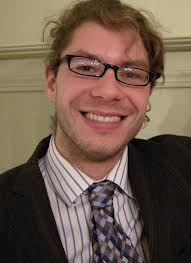
Présentation du midi: Les membres du CRÉ sont heureuses et heureux d’accueillir Antoine Panaïoti, qui nous offrira une présentation intitulée « Renversement des valeurs épistémiques et « immoralisme » chez Nietzsche et Nāgārjuna ».
Pour y participer par zoom, c’est ici.
Résumé
C’est d’abord et avant tout la « valeur de la vérité » que Nietzsche, dans ses textes tardifs, remettra en question à titre de soi-disant « immoraliste » – une figure qui représente à la fois le plus fin produit et l’adversaire le plus redoutable d’une la morale platonique fondée, justement, sur un culte du Vrai. En effet, c’est en tant que pourfendeur infatigable et systématique de la tromperie sous toutes ses formes que Nietzsche dévoile les fondements délusoires sur lesquels repose la dichotomie moralo-épistémique classique Vrai/Faux, ainsi que le ressentiment et la volonté d’anéantissement qu’elle exprime. Ainsi se réalise l’implosion de l’édifice philosophico-religieux platonico-chrétien sous le poids de ses propres exigences morales, ce qui rendra possible l’émergence de l’éthos perspectiviste. S’il apparaît si important aux yeux de Nietzsche d’opérer un tel renversement des valeurs épistémiques, c’est qu’il craint que la modernité européenne ne bascule dans un « nouveau Bouddhisme européen » caractérisé par un scepticisme abattu. Dans cette conférence, je jette un regard critique sur cet aspect de la philosophie comparée nietzschéenne et défends la thèse selon laquelle le philosophe bouddhiste Nāgārjuna (IIème siècle) est dans les faits un précurseur de Nietzsche en matière de refonte radicale de l’axiologie épistémique. Je chercherai à montrer que, dans leur lutte « immoraliste » contre la tyrannie du Vrai, Nāgārjuna et Nietzsche sont des alliés dont les programmes philosophiques gagneraient à être hybridés.
Bio-bibliographie : Antoine Panaïoti est Professeur adjoint au département de philosophie de la Toronto Metropolitan University. Diplômé de l’Université McGill et de l’Université de Cambridge et ancien membre du CRE, il est l’auteur de Nietzsche and Buddhist Philosophy (Cambridge University Press, 2013). Plus récemment, ses textes ont paru dans les pages de Comparative Philosophy, The Journal of the History of Philosophy, The Journal of Transcultural Psychiatry, The Journal of World Philosophies, Mind, Philosophiques, et Zygon: Journal of Religion and Science.
-
Christian Byk (ISJPS, Université Paris 1 Panthéon-Sorbonne – CNRS UMR 8103) @ Mode hybride. Salle 3171-1 à l’ESPUM
17 h 00 – 19 h 00

Principes fondamentaux de la bioéthique française: entre mythe et réalité
Le programme de bioéthique de l’UdeM et le CRÉ sont heureux de vous inviter à une présentation de Christian Byk, rattaché comme chercheur associé à l’Institut des sciences juridique et philosophique de la Sorbonne (ISJPS, Université Paris 1 Panthéon-Sorbonne – CNRS UMR 8103, présentation intitulée « Principes fondamentaux de la bioéthique française: entre mythe et réalité ».
L’événement sera hybride : en personne avec un lien zoom disponible.
Pour y participer par Zoom, c’est ici.
L’événement sera suivi d’un vin d’honneur pour les participant.es en personne. Ce sera l’occasion d’avoir des échanges informels avec les professeurs Byk et Dupras.
Résumé
La bioéthique française a la particularité d’être devenue l’un des éléments clés de la manière dont la France entend se présenter au Monde : une Nation qui promeut les Droits de l’Homme dans tous les domaines et qui a, grâce au rôle de l’État, la capacité de réglementer la bioéthique dans ses moindres détails, qui ailleurs relèveraient surtout des bonnes pratiques professionnelles. Il s’ensuit que les principes fondamentaux de la bioéthique y sont entendus à la fois comme des principes substantiels liés aux droits de l’homme et comme des principes d’ordre public visant à assurer une gouvernance à visée universelle des questions de bioéthique.
Biographie
Christian Byk est juge à la Cour d’appel de Paris et Secrétaire général de l’Association internationale droit,éthique et science. Il a représenté la France au comité de bioéthique du Conseil de l’Europe (1983-91), puis a été conseiller chargé de la bioéthique du Secrétaire Général du Conseil de l’Europe (1991-93) et a rédigé le premier projet de Convention européenne sur la biomédecine .
Depuis les années 1980, il participe aux activités de l’UNESCO dans le domaine de la bioéthique, est membre du Comité intergouvernemental de bioéthique dont il a été vice-président (2015-2017) et président (2017-2019) et préside depuis 2002 le comité de bioéthique de la Commission française pour l’UNESCO. Enfin, il dirige le Journal international de bioéthique et la revue Droit, santé, société.
-
Science Philosophie Société
9 Mai – 12 Mai Jour entier

Le CRÉ est un fier commanditaire du Congrès de la Société de philosophie du Québec, qui aura lieu du lundi 9 mai au jeudi 12 mai 2022 en ligne ! Pour y participer, vous devez adhérer à la Société de philosophie du Québec à l’adresse suivante : https://laspq.org/adhesion-et-renouvellement et payer les coûts d’inscription de l’ACFAS.
Quatre conférences plénières: Valéry Giroux (CRÉ), Jocelyn Maclure (McGill), Stéphanie Ruphy (École normale supérieure) et Manon Garcia (Yale). Et des interventions de nombreux.ses chercheur.ses du CRÉ: notamment, Aude Bandini, Antoine C. Dussault, Amandine Catala, Charles Côté-Bouchard, Étienne Brown, Peter Dietsch, François Claveau, Marc-Kevin Daoust, Alexandra Guité, Allen Habib, Naïma Hamrouni, Christian Jobin, Marie-Pier Lemay, Åsbjørn Melkevik, Alexis Ouellet-Simard, David Robichaud, Juliette Roussin, Jocelyne Saint-Arnaud, Guillaume Soucy, Patrick Turmel, et Rafael Ziegler.
-
Odome Angone (Université de Cheikh Anta Diop de Dakar) @ Mode hybride. Salle C-2059 du Carrefour des arts et des sciences
14 h 00 – 15 h 15
 Conférence de professeure Odome Angone (Université de Cheikh Anta Diop de Dakar) organisée par le CRE en collaboration avec le vice-recteur Jean-François Gaudreault-Desbiens.Pour y participer par Zoom, c’est ici!
Titre de la communication: Femme africaine, clichés et stéréotypes. Une conversation sur l’héritage colonial du patriarcat.
Bio: Odome Angone est une enseignante-chercheuse en poste à l’Université Cheikh Anta Diop de Dakar. Ses travaux portent essentiellement sur l’identité articulée aux nouveaux espaces de l’habiter contemporain en l’occurrence l’imaginaire, le cybermonde, la langue et le milieu universitaire dans une certaine mesure en tant qu’agents du statuquo et cadres de perpétuation des inégalités structurelles. Militante défenseure des Droits des femmes africaines, ses axes de recherches s’intéressent aux féminismes africains dans une perspective intersectionnelle et décoloniale. Femmes noires francophones (2020) son essai le plus récent est à ce titre une réflexion sur le patriarcat et le racisme aux XX-XXIèmes siècles.
Résumé: Dans l’inconscient collectif, lorsque l’on pointe du doigt les traditions patriarcales moyenâgeuses en Afrique, on ne les associe presque jamais aux nombreuses manifestations métastatiques de la langue française en tant que véhicule/catalyseur/vectrice des imaginaires et par conséquent, héritage résiduel en lien direct avec l’institutionnalisation de la domination des corps féminins à l’aune du Code Napoléon de Mars 1804, une des pierres angulaires à nos jours du patriarcat suprématiste.Insister sur le rôle qu’exerce activement à nos jours la survivance du colonialisme comme surgeon corolaire polluant, force motrice en arrière-plan et refoulé symptomatique du passé irrésolu dans la mise en récit d’un imaginaire patriarcal unanimement clivant, scandé vertigineusement au Sud du Sahara, permet d’inscrire les clichés et stéréotypes dans l’écosystème d’une longue tradition de construction des corps « autres », enfantés spécifiquement dans l’antre des politiques réductionnistes de l’Ancien empire français en Afrique. In fine, cela permettra de démanteler l’arbre qui cache la forêt, c’est-à-dire la mise en relief des dommages collatéraux corrélés aux rapports de pouvoir encore opérant dans nos récits (in)consciemment, quoique brouillés par la distance géographique.
Pour précision, le patriarcat en tant qu’épine dorsale institutionnelle ou charpente référentielle visant le contrôle des corps « femmes » et la naturalisation binaire des inégalités de sexes, au sein de l’administration postcoloniale (ou postindépendances) en Afrique francophone, est mis en pratique dans le cadre du droit civil de la famille, à partir d’une adoption mimétique, à la virgule près, du code civil français, plus précisément le code Napoléon de 1804 en héritage; lequel dote la figure masculine d’une puissance maritale oppressive, réduisant la femme en une mineure éternellement sur béquille, infantilisée, sous tutelle juridique, économique, intellectuelle et matérielle au côté du conjoint.
-
Toni Haastrup (U. of Stirling) @ Université de Montréal, Salle 104
16 h 00 – 18 h 00

Dans le cadre des conférences Simone Veil 2021-2022, présentation intitulée « Towards a Just Foreign Policy? Interrogating the Promotion of ‘Feminism’ in the EU External Relations Practice ».
Co-organisé par le CRÉ, le CÉRIUM, le Réseau Perspectives Féministes et le Centre Jean Monnet.