
Évènements passés
Archives du calendrier
-
Julie Jebeile (Université de Berne) @ Zoom.
12 h 30 – 14 h 30
Julie Jebeile, Université de Berne, « Feminist Perspectives on Philosophy of Climate Science » (online | en ligne).
Résumé
For several decades, climate science has provided the necessary insight to both understand the past and present climate, and to project future climate impacts, which in turn serve mitigation and adaptation policies. However, there is a so-called usability gap between the predictions climate models yield, and what people really need to know for climate change adaption. The usability gap raises intertwined epistemic and ethical issues, in particular as climate change increases inequalities. The philosophy of climate science has mainly focused on the adequacy of the climate models employed for the purpose of providing reliable information to decision-makers. Yet an adapted philosophical approach is required to understand how to provide reliable and usable information which fairly address the diversity of our needs as stakeholders. In this talk, I will argue that feminist epistemologies can provide complementary analyses and concepts in order to tackle the usability gap. I will outline a research programme that explores four interrelated avenues: the integration of stakeholders’ values in climate services; the use of several climate modelling perspectives; the inclusion of local and indigenous knowledge; and the connection between epistemic injustice and climate injustice.
-
“A Cares-based Account of the Gendered Self” @ Salle 0040, Pavillon d'aménagement de l'Université de Montréal
12 h 00 – 13 h 15
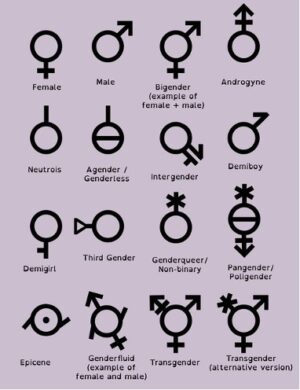
Dans le cadre des midis de l’éthique du CRÉ, Stephanie Kapusta (Dalhousie University) nous offrira une présentation intitulée “A Cares-based Account of the Gendered Self”.
Résumé
There has been considerable recent work within analytic philosophy on gender identity, particularly within social ontology. In contradistinction to Jenkins’ “norm-relevance” account and McKitrick’s dispositional account, I propose a cares-based account in which the agential self is constituted by its cares, that is, by those emotional and perceptual dispositions that necessitate efficacious volitions toward action (Shoemaker). The gendered self, specifically, is constituted by a nexus of cares that necessitate actions which can be or are perceived within an agent’s social environment as gendered. These actions include gestures, attire, body management practices and – most importantly – declarations of self-identification. They do not need to be explicitly linked to gender in the mind of the agent, but can, instead, be viewed as necessary means to affect a cared-for object. In fact, because reflection upon one’s volitions is not required on this account, it is able to make sense of respecting the gender autonomy of children and some cognitively disabled persons.
Source photo: pangendering.tumblr.com.
-
John Hacker-Wright (University of Guelph) @ Salle 0035 du Pavillon de l’aménagement, Université de Montréal
10 h 00 – 12 h 00
 Conférence GRIN : John Hacker-Wright (University of Guelph)Practical Wisdom as Knowledge of the Human Good
Résumé/Abstract:
This paper concerns the idea of practical wisdom or phronēsis understood along the lines Aristotle presents it in Nicomachean Ethics Book VI. There he defines phronēsis through examining what is characteristic of the practically wise person, the phronimos: it is someone “able to deliberate correctly … about what sorts of things further living well as a whole (pros to eu zen holos)” (1140a25-27). Some scholars reject the idea that Aristotle advocates phronēsis as general knowledge concerning human life and contend that the knowledge of the phronimos is a contextual, perceptual sensitivity that prompts action. It is the capacity to get things right “occasion by occasion,” as John McDowell puts it. I will not be contesting this view as a reading of Aristotle, but I will argue that some of the philosophical objections to phronēsis as general knowledge can be set aside once we place that putative general knowledge in its proper context. The worry is that such general knowledge postulates phronēsis as a ‘blueprint’ for acting well that seems implausibly intellectual. On the blueprint model, phronēsis is a body of knowledge that is arrived at through an independent exercise of the intellect in which, for example, one takes a set of goods and contrives a manner of living that combines them optimally. A more plausible generalism is conceivable. The most general knowledge possessed by the phronimos is knowledge concerning what it is good to be doing over the most extended period. The progressive infinitive is important because the human good is a rational activity, a praxis meta logou, and one that is sustained throughout the whole of life. Without the emphatic progressive aspect, it is too easy to look at what good we might accomplish through the completion of our actions rather than the good we achieve in actively doing them. Hence, the justification that we have for pursuing one sort of life over another must consist of insight into the good of the activity itself rather than what results from doing it. Part of the knowledge of the phronimos is the thin yet important general knowledge of the best activity to engage in over the course of a lifetime, rather than an elaborate plan arrived at in advance or codified decision procedure that will optimize one’s achievement of the good. -
Conférence de Charles Mills @ Restaurant Pocha de Marie
16 h 00 – 18 h 30

En guise d’hommage à Charles W. Mills (1951-2021), une projection de sa 2020 Tanner Lecture on Human Values – Theorizing Racial Justice est organisée au restaurant Pocha de Marie. La projection sera suivie d’une discussion.
-
Reasons to trust @ Agora, près du HEC, si la météo le permet
12 h 00 – 13 h 15

Miriam McCormick nous offrira une présentation intitulée « Reasons to Trust » dans le cadre des midis de l’éthique du CRÉ.
Résumé
Some reasons to trust are evidential; if I know someone well and come to see that he can be counted on, keep his word, etc., these are evidential reasons to trust him. But trust does not only come about from a careful weighing of the evidence; at least some of the reasons for trusting are non-evidential, or broadly practical. I trust you because you are my friend or because our relationship requires that I do, or because I love you. If I trust you do something then I believe you will do that thing. Yet, most epistemologists deny that practical reasons can be genuine reasons for belief. Faced with these phenomena, three routes are open: (i) Accept that trust based on practical reasons can be rational and so conclude trusting is not believing, (ii) Accept that trusting is believing and so deny that trust based on practical reasons is rational, (iii) Accept that trust based on practical reasons can be rational, that trusting is believing, and so conclude that believing for practical reasons can sometimes be rational. One finds endorsement of the first two options, but very little for the third, which is the option I defend. Thinking about the rationality of trust can help us better understand the nature of belief. I argue that trust in best thought of as an emotion, where emotions are understood as including cognitive and non-cognitive elements. If trusting someone is believing them then this provides some motivation for thinking of beliefs in general as kinds of emotions.
-
Sara Protasi (University of Puget Sound) @ Zoom
10 h 00 – 11 h 30
Première conférence GRIN de la saison:
Sara Protasi (University of Puget Sound) – Envy and Prejudice: The Role of Envy in a Racially Divided Public Sphere
Présentation ZOOM
Abstract: In recent times philosophers of emotions have started investigating the role of anger, hatred, fear, and contempt in relation to racism and racial injustice. Envy, however, has been so far ignored. In this talk I start remedying this lacuna by asking what role group envy may play in racial relations. I suggest that different forms of malicious envy play a central role in anti-Asian racism, in particular, and explore the possibility that more benign forms of envy may drive positive, if limited, political change. -
Journées d’étude jeunes chercheuse.eurs du GRÉEA | GRÉEA’s early career scholars workshop @ En ligne. Informations à venir.
23 Sep – 24 Sep Jour entier

Organisation : Ely Mermans & Véronique Armstrong
***
Le français suit
This workshop aims to give an opportunity to student GRÉEA’s members and early career scholars whose research tackle environmental or animal ethics issues from different perspectives to publicize their work within a dedicated space favorable to exchange and discussion.
The workshop will be held through ZOOM (time zone, EDT).
—
L’objectif de ces journées d’étude est de permettre aux membres étudiant·es du GRÉEA et aux jeunes chercheuse·eurs, qui travaillent sur des questions d’éthique environnementale ou d’éthique animale à partir de différentes approches, de publiciser leurs travaux dans un espace propice à l’échange et à la discussion.
Les journées se dérouleront sur ZOOM (fuseau horaire, EDT).
PROGRAM | PROGRAMME
Jeudi 23 septembre | Thursday, September 23 (Time zone : EDT)
10:00 – 10:15 | Mot d’accueil par | Welcoming remarks by Kristin Voigt (McGill Universty, GRÉEA)
10:15 – 12:10| Bloc 1 – Éthique de l’environnement et climatique | Environmental & Climate Ethics. Présidence | Chair : Ely Mermans, Université de Montréal, Université Paris 1
10:15 – 10:50 – Aurélie Bélisle-Richard, Université Laval, « L’éthique de la terre agricole chez Aldo Leopold : quels principes pour une agriculture biotique ? »
10:55 – 11:30 – Charles Fontaine, UQTR, « La nature sans équilibre : une éthique écocentriste peut-elle subsister ? »
11:35 – 12:10 – Ilias Voiron, Université Lyon-III-Jean-Moulin, « Structure causale du changement climatique et responsabilité morale »
12:15 – 13:45 | DÎNER | LUNCH
13:45 – 15:40 | Bloc 2 – Repenser les rapports humains-non-humains | Rethinking human-non-human relationships. Présidence | Chair : Véronique Armstrong, Université de Montréal
13:45 – 14:20 – Stephanie Eccles, Concordia University, « Making Animal Waste Essential: North Carolina, Hurricane’s, and Disaster Mortality Management Strategies »
14:25 – 15:00 – Darren Chang, University of Sydney, « Animal Sanctuaries as Autonomous Zones? Lessons from the Oppressed »
15:05 – 15:40 – Laurie Gagnon-Bouchard, UQTR, « L’écoféminisme et l’éthique de la vulnérabilité pour transformer notre rapport à la nature et véritablement nous engager dans une transition socioécologique »
18:00 – 20:00 | 6@8
(en présentiel | in person, lieu à venir| information to come)***
Vendredi 24 septembre | Friday, September 24 (Time zone : EDT)
09:05 – 09:15 | Accueil des participant·es | Attendees welcome
09:15 – 12:00| Bloc 3 – Droits animaux & relations interspécifiques | Animal rights & interspecies relationships. Présidence | Chair :Charles Fontaine, UQTR
09:15 – 09:50 – Maxime Pinette, Université Sherbrooke, « L’argument de la racine psychologique des oppressions humaines et animales »
09:55 – 10:30 – Marie-Andrée Plante & Michaël Lessard, McGill University & Toronto University, « Where the Wild Things Are (and Have Been): A Genealogy of Legal Discourses on Animals in Québec » (en francais | in French)
10:30 – 10:45 – PAUSE | BREAK
10:45 – 11:20 – Laÿna Droz, Basque Center for Climate Change, « Beyond the human-nature divide: Exploring multispecies societies in the context of the global pluralism of worldviews. »
11:25 – 12:00 – Agnès Villette, Winchester School of Art, University of Southampton, « L’Etranger de l’espèce »
FIN DES JOURNÉES | END OF THE WORKSHOP
-
« Agential Power and Structural Power, Causal and Non-Causal » @ Extérieur. Conditionnel à une météo favorable!
12 h 00 – 13 h 15

Si la météo le permet, le premier Midi de l’éthique du CRÉ de l’année 2021-2022 sera tenu dehors, tout près des locaux du CRÉ. Plus d’informations suivront.
Présentation d’Arash Abizadeh, intitulée « Agential Power and Structural Power, Causal and Non-Causal ».
Abstract
Many theorists of social power assume that agents’ power operates only by way of their intentional actions and their causal role in effecting outcomes. The former assumption is true of agential power, the latter of causal power, but neither is true of the social power of agents in general. Distinguishing between agential and structural power, I defend a notion of structural power as a type of passive power agents have in virtue of their position in a social structure and independently of their intentional actions. Distinguishing between causal and non-causal power, I also defend a non-causal type of power by which agents effect or propitiate outcomes without causing them. Agential and structural power, moreover, are internally related: structural power is in certain contexts latently agential.
-
Spécisme et autres discriminations / Speciesism and other discriminations @ Plateforme Zoom
30 Août – 31 Août Jour entier

(English follows)
Spécisme et autres discriminations
Colloque GRÉEA/CRÉ
Montréal, 30-31 août 2021
Pour s’inscrire, c’est ici!
Les notions et les phénomènes relatifs au racisme et au sexisme ont bénéficié d’une attention privilégiée en philosophie morale et politique. De nombreux travaux ont été consacrés à leur analyse conceptuelle et à la recherche de solutions aux problèmes de justice que les préjugés, la discrimination et l’oppression raciale et/ou genrée peuvent soulever en théorie et en pratique. Plus récemment, des chercheur.se.s ont élargi ces débats aux questions posées par le capacitisme. Les tenant.e.s de la théorie critique du handicap, par exemple, ont fait beaucoup pour modifier la conception dominante de la normalité qui stigmatise les personnes en situation de handicap en les présentant comme inférieures, d’une manière ou d’une autre, aux personnes valides. Dans le même ordre d’idées, des auteur.rice.s dénoncent le spécisme, qu’ils et elles identifient, par analogie avec le racisme, le sexisme ou le capacitisme, à une forme de discrimination, de préjugés ou de mépris à l’égard de certains individus; en l’occurrence, ceux qui n’appartiennent pas à certaines espèces animales (l’espèce humaine principalement) ou qui ne possèdent pas l’une ou l’autre des propriétés associées aux espèces privilégiées (les capacités cognitives sophistiquées, le plus souvent).
Dans le cadre de ce colloque, nous nous intéresserons au spécisme et à la manière dont il se compare au racisme, au sexisme et au capacitisme. Nous chercherons à mieux comprendre les phénomènes tels que la discrimination, l’oppression, la domination et la partialité à travers le recoupement des différentes formes qu’ils peuvent prendre, dans l’espoir de découvrir, peut-être, de nouvelles pistes dans les luttes menées contre ces injustices.
Lundi 30 août 2021
9h00 Mot de bienvenue – Christine Tappolet (UdeM, Directrice du CRÉ) et Kristin Voigt (McGill, Responsable du GRÉEA et co-directrice de l’axe Éthique environnementale et animale du CRÉ)
9h15 – 12h00
Panel #1 – DISCRIMINATION, OPPRESSION ET INTERSECTIONALITÉ
Coorganisatrices: Kristin Voigt (McGill) et Natalie Stoljar (McGill)
Bien que les définitions précises du spécisme, du racisme, du capacitisme, etc. soient controversées, elles présentent souvent ces phénomènes comme des formes d’oppression et des indicateurs d’inégalités et d’injustices structurelles. Cette table ronde cherchera à faire avancer le débat en explorant un certain nombre de questions conceptuelles sur l’oppression, l’injustice structurelle et la discrimination, et les liens qui existent entre elles.
Parmi les questions qui pourraient être abordées, mentionnons les suivantes :
- Qu’est-ce que l’oppression ? Existe-t-il une caractéristique fondamentale de l’oppression qui se retrouve dans toutes les formes qu’elle peut prendre, par exemple celle qui se fonde sur le sexe, l’appartenance à une espèce, la race ou la situation de handicap ?
- Certains types d’oppression – comme l’oppression épistémique ou l’oppression intériorisée – sont-ils également pertinents pour chacun de ces différents types d’oppression ?
- Quels sont les devoirs créés par l’oppression et l’inégalité structurelle, et à qui incombent ces devoirs (par exemple aux victimes, spectateurs, bénéficiaires, etc.) ?
- Quelle est la relation entre l’oppression et d’autres concepts apparentés, tels que la discrimination et l’injustice structurelle ?
- Comment l’oppression et l’inégalité structurelle façonnent-elles la perception que les individus ont d’eux-mêmes et des autres, ainsi que les discours publics ? Étant donné les effets persistants et préjudiciables de l’oppression sur les individus, quels sont les outils disponibles pour y remédier ?
Présentations:
Amandine Catala (UQÀM) -« Epistemic Injustice, Intersectionality, and Autism »;
Benjamin Eidelson (Harvard Law) -« Nonhuman Animals and the Concept of Discrimination »;
Natalie Stoljar (McGill) -Oppression and nonhuman animals (brief remarks) ».13h00 – 16H30
Panel #2 – LE SPÉCISME ET LE SEXISME
Coorganisatrices: Naïma Hamrouni (UQTR), Hannah Carnegy-Arbuthnott (U. of York) et Virginie Simoneau-Gilbert (Oxford U.)
Nombre de femmes historiquement engagées dans la lutte pour les droits des femmes étaient par ailleurs impliquées au sein d’organismes de protection des animaux. Cependant, une partie de la rhétorique utilisée historiquement dans les campagnes féministes a supposé que la meilleure manière de combattre la subordination des femmes était de dénoncer leur déshumanisation et leur animalisation en revendiquant leur appartenance au groupe dominant constitué des êtres humains, par opposition aux autres animaux. Par exemple, le pouvoir des critiques telles que le fait d’être traité « comme un morceau de viande », ou que ceux qui objectivent agissent « comme des porcs » vient de l’invocation implicite d’une hiérarchie de dignité entre les humains et les autres animaux.
L’émergence de ce type de rhétorique dans les milieux féministes n’est peut-être pas surprenante. Un mécanisme important de la subordination patriarcale sur les axes du sexe, de la race et de la classe consiste à relayer les groupes opprimés à un “autre”, en les présentant comme bestiaux et donc non civilisés, ne méritant pas un respect égal.
Pour ceux et celles qui s’opposent au spécisme, cela soulève la question de savoir comment combattre de telles forces oppressives sans réaffirmer une hiérarchie des valeurs entre les humains et les animaux non humains, et de nombreuses (éco)féministes sont précisément opposées aux stratégies d’émancipation qui sont employées au détriment des groupes marginalisés et vulnérables d’individus, dont les animaux non humains. C’est ce qui les amène à critiquer les rapprochements faits entre les femmes et les animaux dans la publicité qui vise à dénoncer le sexisme, parce qu’ils laissent entendre que des pratiques oppressives ne soulèvent un problème moral que lorsqu’elles concernent des femmes, mais non des animaux non humains. À l’inverse, elles s’élèvent aussi contre les campagnes antispécistes misant sur l’instrumentalisation du corps des femmes (comme certaines campagnes de sensibilisation au sort des animaux déployées par l’organisme Peta), qui semblent nuire au féminisme. On pense qu’il est plus juste et qu’il sera sans doute plus efficace de mener ces luttes contre les privilèges injustes de manière convergente et solidaire.
Dans ce panel, seront notamment explorés les rapprochements patriarcuax souvent faits entre les femmes et les animaux non humains par la mise en avant de dualités associées au genre et à la race (sujet/objet; raison/émotion; dépendance/autonomie; instinct et intuition/liberté; nature/culture; vulnérabilité/pouvoir; vie biologique/vie biographique; etc.), par le recours à certains actes de langage (compliments ou insultes animalistes genrés) ou par des pratiques de contrôle du corps ou des fonctions sociales sexuées (reproduction, sphère domestique, servir, soigner, etc.).
Présentations:
Christiane Bailey (Social Justice Centre, Concordia) -« L’écoféminisme et la thèse des destins liés »;
Lauren Corman (Brock U.) -« A Gendered Rubik’s Cube: Slaughterhouse Labour, Violence, and Trauma ».Commentaires:
Laurie Gagnon-Bouchard (UQTR);
Angie Pepper (U. of Roehampton).Mardi 31 août 2021
9h30-12h00
Panel #3 –LE SPÉCISME ET LE RACISME
Coorganisateurs: Luc Faucher (UQÀM) et François Jaquet (CRÉ)
À l’origine, le spécisme a évidemment été défini par analogie avec le racisme : tandis que les racistes discriminent en fonction de la race, les spécistes discriminent en fonction de l’espèce. Mais l’analogie ne s’arrête pas là. Selon ses opposants, le spécisme est injuste pour la même raison qui rend le racisme injuste. Leur argument est simple : le racisme est injuste parce qu’il implique un traitement différentiel en l’absence d’une différence moralement pertinente ; or le spécisme en fait autant ; donc, le spécisme est lui aussi injuste.
Cette analogie entre le spécisme et le racisme constitue bien sûr un sujet sensible. Pendant la plus grande partie de l’histoire humaine, on trouvait acceptable de comparer les « groupes racisés » aux animaux. Que ce ne soit plus le cas est bien sûr un signe de progrès moral. Mais cela révèle aussi le chemin qui reste à parcourir : un jour peut-être le terme « animal » ne sera-t-il plus utilisé comme une insulte.
Dans ce contexte critique, quels parallèles peut-on légitimement établir entre le spécisme et le racisme – quelles sont les perspectives et les limites de cette analogie ? Et quels ponts construire entre l’étude philosophique et scientifique de ces deux formes de discrimination ? Ce panel se fixe pour objectif d’aborder ces questions.
Présentations:
Dalida Awada (UdeM) -« Racisme et spécisme : bien plus qu’une analogie »;
Luc Faucher (UQÀM) -« Sans émotion: comment l’approche émotionnelle du racisme éclaire le spécisme ordinaire »;
François Jaquet (CRÉ) -« Speciesism and Tribalism: Embarrassing Origins ».13h00-16h30
Panel #4 – LE SPÉCISME ET LE CAPACITISME
Coorganisateur.rice : Jonas-Sébastien Beaudry (McGill) et Valéry Giroux (CRÉ)
Le capacitisme et le spécisme désignent tous deux des oppressions consistant à inférioriser les individus dépourvus des capacités physiques et mentales que possèdent ceux qui sont considérés comme les véritables sujets moraux, politiques et légaux : les êtres humains neurotypiques n’ayant aucun handicap physique. Le capacitisme vise les êtres humains dont le corps ou l’esprit s’éloigne de la norme alors que le spécisme cible les animaux non humains parce qu’on les considère comme dépourvus de certaines capacités cognitives sophistiquées typiquement associées à l’humanité.
À première vue, ces deux types de discriminations semblent avoir plusieurs points en commun et leur théorisation pourrait, l’une par l’autre, être éclairée. On pourrait même comprendre le spécisme comme une forme de capacité. Cependant, les chercheur.se.s en théorie du handicap et ceux.lles qui travaillent en éthique animale ne conçoivent pas toujours l’oppression de la même façon et se sont même parfois affrontés. Par exemple, certains théoriciens du handicap pensent qu’établir des parallèles entre les animaux non humains et les personnes handicapées pourrait dénigrer le statut d’êtres humains vulnérables plutôt que d’élever celui des animaux non humains.
Ce panel réunit des expert.e.s qui s’intéressent à cette tension et cherchent à trouver des solutions pour la surmonter et penser les deux champs d’études de manières compatibles et complémentaires.
Présentations:
Shelley Tremain (BIOPOLITICAL PHILOSOPHY) -« Ableism, Animals, and Apparatuses »;
Agnes Trzak (Activist-scholar) – « Speciesism and Disability: A Story about a disabled Dog, a Duck and the Woman who Cared for Them ».Commentaires:
Valéry Giroux (CRÉ);
Matthew Palynchuk (McGill).________________________
Speciesism and other discriminations
Conference GREEA/CRÉ
Montreal, August 30-31 2021
Please, register here!
Notions and phenomena relating to racism and sexism have received special attention in moral and political philosophy. Much work has been devoted to the conceptual analysis of these concepts and to finding solutions to the problems of justice that prejudice, discrimination and racial and/or gender oppression may raise in theory and practice. More recently, researchers have extended these debates to include questions about ableism. Critical disability theory theorists, for example, have done much to change the dominant conception of normality that stigmatizes people with disabilities by presenting them as inferior, in one way or another, to able-bodied people. In the same vein, authors denounce speciesism, which they identify, by analogy with racism, sexism or ableism, as a form of discrimination, prejudice or disrespect towards certain individuals; in this case, those who do not belong to certain animal species (mainly the Homo sapien one) or who do not possess the properties associated with the privileged species (sophisticated cognitive abilities, most often).
In this conference, we will focus on speciesism and how it compares to racism, sexism and ableism. We will seek to better understand phenomena such as discrimination, oppression, domination and bias through the intersection of the different forms they can take, in the hope of discovering, perhaps, new avenues in the fight against these injustices.
Monday, August 30th
9:00 Welcoming remarks – Christine Tappolet (UdeM, Director of the CRÉ) and Kristin Voigt (McGill, Responsible of GRÉEA and co-director of the axis Éthique environnementale et animale, at CRÉ).
9:15– 12:00 am
Panel #1 – DISCRIMINATION, OPPRESSION & INTERSECTIONALITY
Co-organizers: Kristin Voigt (McGill) and Natalie Stoljar (McGill)
While the precise definitions of speciesism, racism, ableism, etc. are contentious, they are often considered forms of oppression and as indicators of structural inequality and injustice. This panel will seek to advance the debate by exploring a number of conceptual questions about oppression, structural injustice and discrimination, and the connections between them.
Possible questions to be addressed include:
- What is oppression? Is there a core feature of oppression that is consistent across different kinds of oppression, e.g. based on gender, species membership, race, or disability status?
- Are specific kinds of oppression — such as epistemic oppression or internalised oppression — equally relevant for these different kinds of oppression?
- Which duties do oppression and structural inequality create, and on whom do such duties fall (e.g. on victims, bystanders, beneficiaries, etc.)?
- What is the relationship between oppression and other cognate concepts, such as discrimination and structural injustice?
- How do oppression and structural inequality shape individuals’ perceptions of themselves and others, as well as public discourses? Given the persistent and damaging effects that oppression has on individuals, which tools are available for addressing it?
Presentations:
Amandine Catala (UQÀM) -« Epistemic Injustice, Intersectionality, and Autism »;
Benjamin Eidelson (Harvard Law) – « Nonhuman Animals and the Concept of Discrimination »;
Natalie Stoljar (McGill) -Oppression and nonhuman animals (brief remarks) ».1:00 – 4:30 pm
Panel #2 – SPECIESISM AND SEXISM
Co-organizers: Naïma Hamrouni (UQTR), Hannah Carnegy-Arbuthnott (U. of York) et Virginie Simoneau-Gilbert (Oxford U.)
Many women historically involved in the struggle for women’s rights were also involved in animal welfare organizations. However, some of the rhetoric historically used in feminist campaigns has assumed that the best way to combat women’s subordination was to denounce their dehumanization and animalization by claiming their membership in the dominant group of human beings, as opposed to other animals. For example, the power of complaints such as being treated “like a piece of meat”, or that those who objectify are “acting like pigs” comes from implicitly invoking a hierarchy of dignity between humans and other animals.
The emergence of this kind of rhetoric in feminist circles is perhaps not surprising. An undeniable aspect of patriarchal subordination on axes of gender, race and class has been the ‘othering’ of oppressed groups by presenting them as bestial and therefore uncivilized, undeserving of equal respect.
For those who oppose speciesism, this raises the question of how to combat such oppressive forces without re-affirming a value hierarchy between humans and non-human animals.Many (eco)feminists are precisely opposed to emancipation strategies that are employed at the expense of marginalized and vulnerable groups of individuals, including non-human animals. This leads them to criticize, for example, the connections made between women and animals in advertising aimed at denouncing sexism, because they suggest that oppressive practices only raise a moral problem when they concern women, but not non-human animals. On the other hand, they criticize anti-speciesist campaigns that focus on the instrumentalization of women’s bodies (such as some of PETA’s animal awareness campaigns), which seem to undermine feminism. It is believed that it is more just and that it will undoubtedly be more effective to conduct these struggles against unfair privileges in a convergent, mutually reinforcing and united manner.
In this panel, the way in which the statuses human and ‘animal’ manifest under patriarchy will be explored, in particular those made by highlighting dualities associated with gendered and racialized identities (subject/object; reason/emotion; dependency/autonomy; instinct and intuition/freedom; nature/culture; vulnerability/power; biological life/biographical life; etc.), by using certain acts of language (gendered compliments or insults relating to animals) or by practices of control of the gendered body or social functions (reproduction, domestic sphere, service, healing, etc.).
Presentations:
Christiane Bailey (Social Justice Centre, Concordia) -« L’écoféminisme et la thèse des destins liés »;
Lauren Corman (Brock U.) -« A Gendered Rubik’s Cube: Slaughterhouse Labour, Violence, and Trauma ».Commentaries:
Laurie Gagnon-Bouchard (UQTR);
Angie Pepper (U. of Roehampton).Tuesday, August 31th
9:30 – 12:00 am
Panel #3 – SPECIESISM AND RACISM
Co-organizers: Luc Faucher (UQÀM) and François Jaquet (CRÉ)
Rather obviously, speciesism was originally defined by analogy with racism: while racists discriminate on the basis of race, speciesists discriminate on the basis of species. But there is more. According to its opponents, speciesism is wrong precisely for the same reason that makes racism wrong. Their argument is straightforward: racism is wrong because it involves differential treatment in the absence of a morally relevant difference; but so does speciesism; hence, speciesism is wrong too.
This analogy between speciesism and racism is of course a sensitive matter. For most of human history, it was considered acceptable to compare “racialized groups” to animals. That this is no longer the case is of course a sign of moral progress. But it also reveals the road that lies ahead of us: maybe one day “animal” will no longer be used as an insult.
In this critical context, what parallels can legitimately be drawn between speciesism and racism—what are the prospects and limits of this analogy? And what bridges can be built between the philosophical and scientific investigation of these two forms of discrimination? It is the aim of this panel to address such questions.
Presentations:
Dalida Awada (UdeM) -« Racisme et spécisme : bien plus qu’une analogie »;
Luc Faucher (UQÀM) -« Sans émotion: comment l’approche émotionnelle du racisme éclaire le spécisme ordinaire »;
François Jaquet (CRÉ) -« Speciesism and Tribalism: Embarrassing Origins ».1:00 – 4:30 pm
Panel # 3 – SPECIESISM AND ABLEISM
Co-organizers: Jonas-Sébastien Beaudry (McGill) and Valéry Giroux (CRÉ)
Ableism and speciesism are two kinds of oppressive outlooks that belittle beings fallen short of the central case of a « full » moral, political and legal subject: an able-bodied and neurotypical human being. Ableism targets human beings whose bodies or mind differ from the norm, and speciesism targets non-human animals mostly because they are considered deprived of some sophisticated cognitive capacities typically associated with humanity.
At first sight, these two kinds of discriminatory outlook seem to have important commonalities, and their theorization could be informed by each other. Some could even conceive speciesism as a form of ableism. However, disability theorists and animal ethicists have not always seen eye to eye on issues of oppression and, indeed, have sometimes clashed. For instance, some disability theorists have suggested that drawing parallels between animals and disabled people may denigrate the status of vulnerable humans rather than elevate that of animals.
This panel brings together experts who would challenge this ongoing tension and seek to emphasize and learn from similarities between these two areas of study.
Presentations:
Shelley Tremain (BIOPOLITICAL PHILOSOPHY) – « Ableism, Animals, and Apparatuses »;
Agnes Trzak (Activist-scholar) – « Speciesism and Disability: A Story about a disabled Dog, a Duck and the Woman who Cared for Them ».Commentaries:
Valéry Giroux (CRÉ);
Matthew Palynchuk (McGill).Photo: « Hope in a Burned Forest », Jo-Anne McAthur, winner category Man and Nature, https://naturephotographeroftheyear.com/.
Résumés/Abstracts
Christiane Bailey (U. York) – L’écoféminisme et la thèse des destins liés
Les écoféministes soutiennent que plusieurs formes d’oppression humaine sont liées à la domination considérée « naturellement juste » des humains sur les autres animaux. Il ne s’agit pas simplement d’affirmer que le spécisme est formellement analogue au racisme et au sexisme (comme le fait notamment Peter Singer) en ce qu’il s’agit d’une discrimination basée sur des critères moralement arbitraires. Selon les écoféministes, il n’existerait pas (ou pas seulement) des liens logiques ou formels entre le spécisme, le racisme et le sexisme, mais bien des liens très concrets, des conditions communes à la fois idéologiques, historiques et matérielles qui encouragent la domination des unes et des autres. Si la thèse des oppressions liées est convaincante, se peut-il que leur libération soit également liée ? C’est cette piste que je suivrai en m’appuyant sur l’histoire de la cause animale, sur la démographie du mouvement et sur les recherches en psychologie morale et sociale pour soutenir qu’un monde plus soucieux des animaux serait probablement un monde plus juste envers les êtres humains – et inversement.
Lauren Corman (Brock U.) – A Gendered Rubik’s Cube: Slaughterhouse Labour, Violence, and Trauma
This paper explores gendered violence and industrialized slaughterhouse labour in North America. Here I trace myriad ways slaughterhouses are gendered and gendering sites, in which kill floor labour is overwhelmingly dominated by men who must perform routinized violence against animals for their work. Over the past two decades, the psychological toll of this employment has gained some impactful academic attention, with an emerging literature on PTSD and PITS (Perpetration-Induced Traumatic Stress) and meatpacking. From gendered labour segregation within packing plants, workplace sexual harassment, and documented “spillover” effects related to not only increased overall crime, but also to increased violent crime and sexual crime in surrounding communities, gender is an important dynamic in understanding slaughterhouse operations and their social effects. I argue that gender in this context is fused with imbricated legacies of racism, speciesism, and colonialism, finding expression in contemporary slaughterhouses. These workplaces remain perpetuators and incubators for multiple forms of violence against workers, animals, and communities.
Benjamin Eidelson (Harvard Law School) – Nonhuman Animals and the Concept of Discrimination
This presentation will map central distinctions in the contemporary philosophical understanding of discrimination. It will then frame a series of questions about whether discrimination offers an apt conceptual framework for analyzing or indicting the mistreatment of nonhuman animals.
François Jaquet (CRÉ) – Speciesism and Tribalism: Embarrassing Origins
Animal ethicists have been debating the morality of speciesism for over forty years. Despite rather persuasive arguments against this form of discrimination, many philosophers continue to assign humans a higher moral status. The primary source of evidence for this position is our intuition that humans’ interests matter more than animals’ similar interests. And it must be acknowledged that this intuition is both powerful and widespread. But should we trust it for all that? The present paper defends a negative answer to that question, based on a debunking argument. The intuitive belief that humans matter more than other animals is unjustified because it results from an epistemically defective process. It is largely shaped by tribalism, our tendency to favor ingroup members as opposed to outgroup members. And this influence is distortive for two reasons. First, tribalism evolved for reasons unrelated to moral truths; hence, it would at best produce true moral beliefs accidentally. Second, tribalism generates a vast amount of false moral beliefs, starting with racist beliefs. Once this intuition is discarded, little evidence remains that speciesism is morally acceptable.
Natalie Stoljar (McGilll) – Oppression and nonhuman animals (brief remarks)
This talk will briefly outline different accounts of oppression in the philosophical literature. It will raise the question of whether nonhuman animals can be said to suffer oppression on any of these accounts. In particular, can the harms suffered by nonhuman animals be explicated as intersectional oppression?
Shelley Tremain (BIOPOLITICAL PHILOSOPHY) – Ableism, Animals, and Apparatuses
My presentation is designed to show how Foucault’s insights can be used to enlarge the scope of discussions between philosophy and theory of disability and critical animal studies. I draw upon Foucault’s identification of far-reaching ensembles of power as apparatuses to argue that this insight can be used to denaturalize the allegedly value-neutral classification of species. Various authors have argued that Foucault’s failure to examine the ways that modern power operates to control the lives of nonhuman animals renders it anthropocentric and speciesist. Such criticisms, I maintain, are superficial and rely upon a misunderstanding of Foucault’s claims about the relatively recent form of power that he called “biopower,” the form of power that is directed at the enhancement of the life of the human as an individual and the life of the human as a species.
Agnes Trzak (activist-scholar) – Speciesism and Disability: A Story about a disabled Dog, a Duck and the Woman who Cared for Them
Forms of human oppression rely on speciesist tools of dehumanisation and objectification to justify and make possible the violence perpetrated by a dominant group over a marginalised one. This is precisely where the intersection between ableism and speciesism lies, as disabled humans are routinely dehumanised and so robbed of agency and a presence in society. In this talk we will explore the dangers of using the concept of ability to justify moral consideration amongst humans and how ableism works beyond constructed species barriers. We will uncover how the construct of “humanness” in a Eurocentric capitalist context is linked to (neurotypical) ability. Where does such a rigid understanding of “humanness” place animals in our ethics? In what ways can we dismantle hierarchies that grant more or less social capital to individuals, based on their ability? Agnes will share an intimate story of her relationship with two of her animal companions, a disabled dog and an injured duck, shedding light onto how we construct certain identities, such as that of a “dog”, or that of a “woman” and exploring what happens when dominant societal expectations towards these fabricated identities cannot be met. As a disabled person, Agnes knows how rigid assumptions about an Other can make many parts of social life inaccessible to the othered person. Yet Agnes relies solely on perception and projection when telling this story, which thus can only ever be a story about the dog and the duck, but never their story.
-
Animal rights & the concept of dignity @ Écrire à ely.mermans@umontreal.ca
12 h 00 – 14 h 00
Table-ronde organisée par le GRÉEA, avec Rainer Ebert (CRÉ, GRÉEA), Pablo Gilabert (Concordia U.) et Will Kymlicka (Queen’s U.).
Abstracts (alphabetical order)
- Rainer Ebert (CRÉ, GRÉEA)
The idea that all humans equally have a special kind of worth, “human dignity,” which is the basis for certain basic rights, such as the right not to be killed, is remarkably popular and has found frequent expression in the law. Some recent philosophical defenses of that idea, by theorists including Patrick Lee, Robert P. George, and George Kateb, tie human dignity to features that purportedly set humans apart from other animals. This risks to sideline or altogether exclude humans on the margins, who are the most vulnerable to human rights violations, as it seems doubtful at best that there really is any morally relevant respect in which we are equal, and discontinuous with other animals, in terms of empirical nature. “New dignitarianism” has been counterposed to the naturalism/moral individualism of philosophers such as Jeff McMahan, who abandon human dignity and equality in favor of a more plausible grounding of moral status in more readily observable empirical properties. I will suggest that this is a false opposition, and argue that there is an account of dignity that combines the virtues of dignitarianism and naturalism, avoiding species snobbery and saving human equality, and can be a powerful political tool to protect the most vulnerable – both human and nonhuman. It bases our dignity on the fact that we are equally and essentially experiencing subjects and thereby focuses our attention on what really matters: us in our own right.
- Pablo Gilabert (Concordia University)
It has been argued that dignitarian conceptions of human rights are problematically exclusionary. The argument, in a nutshell, is this: (1) If a conception of human rights is based on the idea of dignity, then it presupposes human supremacism; (2) such supremacism has unacceptable implications for the treatment of non-human animals, and also for the treatment of human individuals; (3) alternative accounts of human rights, such as those based on considerations about basic needs, vulnerability, and capabilities do not have these unacceptable implications; (4) therefore, we should avoid dignitarian accounts of human rights and favor the alternative accounts instead. In response, I challenge the first premise. My own dignitarian account of human rights (which I presented in Human Dignity and Human Rights (OUP, 2018)) does not presuppose human supremacism. The relevant contrast human rights discourse should be seen to rely on is not the one between humans and other animals, but another one between the claims of people as individuals with various valuable capacities giving rise to their status-dignity and their putative claims as members of some nation, class, or other conventional or less morally significant group. I show, furthermore, that the alternative accounts have serious deficiencies of their own. The problem of making sense of moral standing or status must be addressed to build a philosophically satisfactory account of rights. The dignitarian approach does handle this problem, but it must be recognized that it also faces difficult questions about gradations of status. I conclude by exploring these difficult questions. (It should be noted, however, that under philosophical pressure the alternative accounts would have to face these questions too.)
- Will Kymlicka (Queen’s University)
It is increasingly common to argue that respect for human dignity is the fundamental basis for human rights. There are many different versions of this “dignitarian” account of human rights, but I will focus on one account in particular, which defines human dignity in terms of our discontinuity with and superiority to animals. On this view, the measure of whether humans are treated with dignity is whether they are treated better than animals. Against these “new dignitarians”, I argue that defending human rights on the backs of animals is philosophically suspect and politically self-defeating. Even when dignitarian theorists do not explicitly invoke human supremacism, I will suggest that the discourse of “dignity” is in fact more likely to reinforce speciesism than alternative accounts of rights, such as basic needs, vulnerability, and capabilities. Compared to other concepts in our moral toolbox, “dignity” is more likely to fall under the gravitational pull of human exceptionalism.
-
 Deuxième séance des midi de l’éthique CRÉ+OBVIA, sur l’éthique des systèmes de recommandation avec Martin Gibert, Lê NGuyên Hoang et Maxime Lambrecht: « Faut-il nudger YouTube pour l’environnement? » Cette vidéo de Science4all expose bien le sujet.
-
5th Social Justice Theory Workshop @ Zoom
10 Juin 9 h 45 – 11 Juin 14 h 45

5th Social Justice Theory Workshop
[Montreal time]
It is a closed event.
June 10th
9h45 – Welcome
10h00-11h15 Anca Gheaus (Central European University): “Feminism without Gender Identity.”
Commentator: Amandine Catala (Université du Quebec à Montréal).11h30-12h45 Lisa Herzog (University of Groningen): “The epistemic-trust argument for social justice.”
Commentator: Natalie Stoljar (McGill University).13h30-14h45 Pablo Gilabert (Concordia): “Equality and Dignity.”
Commentator: Adam Hosein (Northeastern University).June 11th
9h45 Welcome
10h00-11h15 Miriam Ronzoni (University of Manchester): “Constructivist Justice as a Problem Solving Concept.”
Commentator: Julie Rose (Dartmouth College)11h30-12h45 Martin O’Neill (University of York) and Markus Furendal (University of Stockholm): « Justice and Collective Capital Institutions: Revisiting Rudolf Meidner, and the Case for Wage-Earner Funds.”
Commentator: Louis-Philippe Hodgson (York University).13h30-14h45 Peter Dietsch (Université de Montréal); “Endogenous comparative advantage and its implications for the incentives argument.”
Commentator: Joseph Heath (University of Toronto).Organizers: Peter Dietsch and Pablo Gilabert, for the Social Justice Centre and Centre de Recherche en Ethique.
-

Dans le cadre d’un hommage à l’oeuvre de Charles W. Mills, l’Association canadienne de philosophie organise une table ronde bilingue sur le thème de Racisme et colonialisme en philosophie canadienne. Partant de l’influence marquante des travaux de Charles W. Mills sur le racisme en philosophie politique et en philosophie de la race, les intervenants partagent leurs réflexions sur les problèmes du racisme et du colonialisme en contexte canadien et discuteront de la manière dont ces problématiques ont orienté leurs propres recherches.
Charles W. Mills (CUNY) en dialogue avec Agnès Berthelot-Raffard (York), Ryoa Chung (U. de Montréal), Naïma Hamrouni (UQTR), Chike Jeffers (Dalhousie), Meena Krishnamurty (Queen’s), Yann Allard-Tremblay (mcGill), Audrey Yap (Victoria). La table ronde sera animée par Tiffany Gordon (Dalhousie) et Alisha Sharma (Queen’s).
Cet événement ouvert est parrainé par la Fédération des sciences humaines, le Canadian Journal of Philosophy, et le Centre de recherche en éthique.
Laissez-passer communautaire: 25$. Si vous vous identifiez en tant que Noir ou Autochtone, le laissez-passer vous est offert gratuitement en 2021. Une réception virtuelle suivra.
-
Money from Nothing by Robert Hockett and Aaron James @ on zoom – link available upon registration by writing to uvicphil@uvic.ca
12 h 30 – 15 h 00

Roundtable on Money from Nothing by Robert Hockett and Aaron James
Co-organised by Peter Dietsch for the Centre de recherche en éthique (CRÉ), Montréal, and Colin Macleod for the Victoria Colloquium
28th May 2021, 9h30-12h PST / 12h30-15h EST
(on zoom – link available upon registration by writing to uvicphil@uvic.ca)
9h30 PST / 12h30 EST
Presentation of the book by Robert Hockett and Aaron James
Q&A
10 mins break
10h30 PST / 13h30 EST
Comments on identifying and respecting the inflationary limit
Gerald Epstein (Department of Economics, University of Massachusetts Amherst)
Anna Stansbury (PhD candidate, Department of Economics, Harvard University)
Response by Hockett & James
Q&A
10 mins break
11h20 PST / 14h20 EST
Comments on the decision procedure and legitimacy of an independent central bank what to use public money for
Jacqueline Best (School of Political Studies, University of Ottawa)
Jens van’ t Klooster (postdoctoral fellow, Katholieke Universiteit Leuven)
Response by Hockett & James
Q&A
Event ends 12pm PST / 3pm EST

-
Philosophie de l’écologie (GRÉEA-CIRST) @ Préinscription : boisvert.anne-marie@uqam.ca
19 h 30 – 21 h 30
Organisé par Anne-Marie Boisvert (UQAM), Antoine C.-Dussault (Lionel-Groulx, CRÉ, CIRST), Véronica Ponce (Marianopolis College) | Préinscription : boisvert.anne-marie@uqam.ca
Lecture de Blandin, Patrick (2007). « L’écosystème existe-t-il? Le tout et la partie en écologie », in Martin, Thierry (2007). Le tout et les parties dans les systèmes naturels, Paris, Vuibert. pp. 21-46.
-
Décolonisation de la pensée et philosophies afrocentriques @ Zoom
10 h 00 – 11 h 30

Dans le cadre des conférences organisées sous le thème phare Antiracisme et décolonisation, Ernest-Marie Mbonda (U. de Moncton) offrira une présentation autour de son dernier livre Une décolonisation de la pensée (Sorbonne PUPS, 2021), intitulée « Décolonisation de la pensée et philosophies afrocentriques ».
Via Zoom.
Résumé
Quelle place occupent les philosophies afrocentriques dans le champ de la décolonisation de la pensée qui est en plein essor ces dernières années ? Cette présentation vise à montrer que malgré les vives controverses dont elles ont été l’objet dans les années 80 et 90, les philosophies afrocentriques permettent de questionner la plupart de nos disciplines, en particulier dans les sciences humaines, dans la perspective de ce qu’il est maintenant convenu d’appeler la « justice épistémique ».
-
Resilience in Action and Belief @ Zoom.
9 h 20 – 14 h 35
 Resilience is commonly understood as the ability that agents exhibit in stressful, uncertain, or challenging situations, when they ‘bounce back,’ adapt, and thrive despite adversity. This workshop is dedicated to a philosophical exploration of the epistemic and practical aspects of human resilience, in particular via the notions of grit, hope, and coping.CRÉ/GRIN Workshop organized by Federica Berdini and Catherine Rioux.
Resilience in Action and Belief
Schedule:
9:20 to 9:30 introduction
9:30-10:30 Federica Berdini (CRÉ/GRIN) – “A Place for Coping in Action Theory”
10:35-11:35 Katie Stockdale (University of Victoria) – “Intrinsic Faith and Resilience”
11:35 to 12:30 break
12:30-1:30 Jennifer Morton (University of North Carolina – Chapel Hill) – “What Should a Teacher Believe?”
1:35 to 2:35 Catherine Rioux (Université Laval/GRIN) – “Hope, Sincerity, and Commitment”
-
Groupe de lecture en éthique environnementale et animale organisé par Juliette Roussin (Université Laval) et François Jaquet (CRÉ).
Discussion autour des textes suivants:
Val Plumwood “Nature, Self, and Gender: Feminism, Environmental Philosophy, and the Critique of Rationalism”, Hypathia, 6(1), 1991.
Robert Sessions, “Deep Ecology versus Ecofeminism: Healthy Differences or Incompatible Philosophies?”, Hypathia, 6(1), 1991.
-

Colloque organisé par Chris Howard (McGill) et Richard Rowland (Leeds).
Le colloque est ouvert aux membres du GRIN et du CRÉ, ainsi que leurs postdocs et chercheurs invités.
For more information: chris.howard@mcgill.ca.
(All times are Pacific Time)
Friday, May 14
9:00-9:45 Sara Protasi (U. of Puget Sound)
10:00-10:45 Selim Berker (Harvard U.)
12:00-12:45 Christine Tappolet (U. de Montréal) and Mauro Rossi (U. du Québec à Montréal)
Saturday, May 15
8:00-8:45 Jonathan Way and Conor McHugh (U. of Southampton)
9:00-9:45 Louise Hanson (U. of Oxford)
10:00-10:45 Jack Woods (University of Leeds)
12:00-12:45 Chris Howard and Stephanie Leary (McGill U.)
1:00-1:45 Michael McKenna (U. of Arizona)
2:00-2:45 Garrett Cullity (Australian National U.)
Sunday, May 16
8:00-8:45 Phillip Stratton-Lake (U. of Reading)
9:00-9:45 Tom Hurka (U. of Toronto)
10:00-10:45 Oded Na’aman (The Hebrew U., Jerusalem)
12:00-12:45 Alex King (Simon Fraser)
1:00-1:45 Richard Rowland (U. of Leeds)
2:00-2:45 Nicolas Southwood (Australian National U.)
-
Alisa Bierria (University of California, Riverside) @ Zoom
12 h 00 – 13 h 30
 Title: Reason, Agency, & Phantom IntentionsAbstract:In previous work, I proposed a concept of « racial conflation, » or the conceptual conflation of « blackness » and « criminality, » as a framework to understand how black agentic action in the U.S. is persistently vulnerable to being re-authored through a frame of criminality. In this talk, I employ racial conflation as a tool to explore how black survivors of domestic and sexual violence are vacated of their self-determined intentions and supplanted with “phantom intentions” as the official explanatory narrative about their experiences of navigating conditions of violence and chaos.Bio: Alisa Bierria is an assistant professor in the Department of Ethnic Studies at the University of California, Riverside. She is developing a manuscript entitled, Missing in Action: Agency, Race, & Invention, which explores how intentional action is socially imagined in contexts of anti-black racism, carceral reasoning, and gendered violence. Alisa’s writing is published in Hypatia: A Journal of Feminist Philosophy, Journal of Social Philosophy, Journal of Popular Music Studies, and in numerous scholarly volumes and anthologies.