Past events
Calendar archives
-
Samuel Dishaw (University of Louvain) @ Room 309, hybrid mode
12 h 00 – 13 h 30
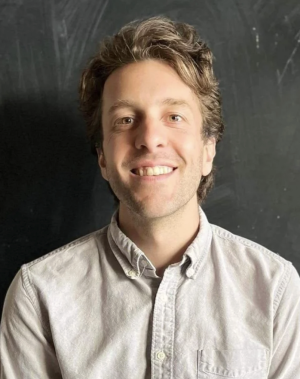
CRÉ members welcome Samuel Dishaw (University of Louvain), who will give us a presentation entitled “Justifiability and the Other’s Point of View”.
To join via Zoom, click here.
Chair: Abe Tobi (CRÉ)
Abstract
Other people deserve our respect. But what is it to respect another person? According to the contractualist, to respect another person is to be moved to act only in ways that we could justify to them. Other influential accounts of respect share the same structure: respect is understood in terms of a hypothetical conversation. I argue that these accounts all leave out something crucial: a concern for the other person’s actual attitudes about our conduct towards them. After motivating such actualism about respect, I defend it against two important objections: that it invites moral conformism, and that it essentially self-regarding. Finally, I argue that actualism about respect illuminates one of the central insights of contractualism itself: that morality concerns our relations to other people. For any relation, no matter how thin, is sensitive to the actual rather than hypothetical attitudes of its members towards it and each other.
-

Annual Workshop of the CRÉ’s Ethics & Economics axis
To connect on Zoom, clic here.
Programme
10:00 – 10:15 am : Coffee and breakfast pastries, served in room 309
10:15 – 10:30 am : Welcome remarks
First session
10:30 – 11:00 am: Jonathan Martineau (Concordia University), “Accélération et présence au monde, pistes de réflexion”
11:00 – 11:30 am: Michaël Lemelin (Université de Montréal), “Réduction du temps de travail: de quel travail parle-t-on ?”
11:30 am – 11:45: Break
11:45 am – 12:15 pm: Denise Celentano (Université de Montréal), “Ghost Work: Conceptual and Normative Concerns”
12:15-13:30 pm : Lunch break — Bring your lunch! We will eat together in Room 309.
Second session
13:30 – 14:00 pm: Morgane Delorme (UQAM and Université Laval), “What is wrong with “financial literacy”? Micro-managing a macro-problem”
14:00 – 14:30 pm: Celia Chui (HEC Montréal), “False Beliefs about False Accusations”
14:30 – 14: 45: Break
14:45 – 15:15 pm : Balkissa Toure and Joé Martineau (HEC Montréal), “De l’innovation à l’exclusion : Enjeux éthiques et impacts organisationnels de l’IA intégrée au processus de dotation”
15:15 – 15:30 pm: Break
Third session
15:30 – 16:00 pm: Dominic Martin (Université du Québec à Montréal), “Meta-propriété, structure organisationnelle et l’éthique par design”
16:00 – 16:30 pm: Gabriel Monette (HEC Montréal), “Coopérer librement : une conception républicaine de la gouvernance coopérative”
16:30 – 17:00 pm: Closing remarks
Informal happy hour at Pub McCarold’s (5400 Côte-des-Neiges)
Organized by the co-leads of the CRÉ’s Ethics and Economics axis: Dominic Martin (UQAM) and Denise Celentano (UdeM).
-
“When Are Architectural Constraints on Future Generations’ Sovereignty Unjust?” @ Room 309, hybrid mode
12 h 00 – 13 h 15

As part of the CRÉ’s Midis de l’éthique series, doctoral candidate Erika Brandl (University of Bergen), who is currently undertaking a research stay at the Centre, will give a talk entitled “When Are Architectural Constraints on Future Generations’ Sovereignty Unjust?”
To join via Zoom, click here.
Abstract
This paper examines when architectural and urban planning practices unjustly constrain the sovereignty of future generations. Architectural structures are long-term, rigid, and durable artefacts that shape and delimit the range of spatial, functional, and aesthetic possibilities available to those who come after us. Drawing on theories of intergenerational fairness, sovereignty, and autonomy, the paper identifies five possible principles that explain when and why such architectural constraints constitute injustice toward future generations: (1) The Principle of Paternalistic Constrain; (2) the Principle of Opportunity Deprivation; (3) the Principle of Non-Substitution; (4) the Principle of Deferred Upkeep; and (5) the Principle of Irreversible Deprivation. Together, these principles delineate a new normative framework for evaluating the justice of architectural constraints across generations. The analysis is illustrated through case studies including, among other, car-centric planning, protected heritage districts, and real estate ownership models. -
A Night at the Philosophy Museum @ Morrin Centre
16 h 00 – 22 h 00

To celebrate UNESCO World Philosophy Day, join us for a bilingual event where we explore what an interactive philosophy museum could be and how it can bring philosophy back to the public and help tackle the world’s most pressing issues.
United around the question: ‘Can philosophy help save the world?’ we will have art, talks, games, interactive modules.. and wine!
Artists:
- Angela Marsh
- Gérard Ntunzwenimana (in collaboration with Webster)
- Christine Sioui Wawanoloath
Talks:
- Catherine Rioux (U. Laval) and Romane Marcotte (U. Laval): “On radicalization”
- Alexandre Gajevic Sayegh (U. Laval): “On Climate Justice”
- Naïma Hamrouni (UQTR): “Feminism for the 99%”
The event is organized by Laura Silva (U. Laval), Patrick Turmel (U. Laval) and Jérôme Gosselin-Tapp (U. Laval), and is supported by the Fonds de recherche du Québec (FRQ), the Centre de recherche en éthique (CRÉ), the Chaire de recherche Démocratie et éthique publique, and the Canadian Society Working for Inclusion in Philosophy (CSWIP).
Graphic design by Romain Lasser.
For more information, visit the event’s Facebook page.
-
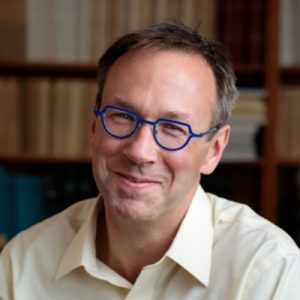
Ben Laurence (University of Chicago) will give a presentation entitled “Labor Struggle as Transformative Experience” as part of the activities of the Philosophy of Work Network.
The activities of the Philosophy of Work Network are open to researchers and graduate students with research interests in this area. Please write to the organizers, Denise Celentano (denise.celentano@umontreal.ca) and Pablo Gilabert (pablo.gilabert@concordia.ca), to receive the zoom link.
Summary
It is a commonplace that workers who participate in dramatic forms of contested collective action—in hard-fought union elections, contract negotiations, or strikes—are often changed by the experience. This talk begins to make the case that such transformative experiences of collective action should be treated seriously in a political philosophy of labor unions. As we will see, the failure to grasp this point raises theoretical problems for some dominant approaches to the theory of unions on which unions cater to interests of workers that are fixed by their structural position in the economy prior to labor struggle. My first thesis is that by pursuing interests through collective struggle, workers acquire new interests rooted in this evolving practical confrontation with employers, including inter alia interests in fostering felicitous conditions for the development and exercise of solidarity. My second thesis speaks to a deeper way in which labor struggle can be transformative. Building on a critical reappropriation of recent philosophical literatures about transformative experience, I argue that such communities of solidarity at the point of production prefigure emancipatory relations between workers by making available a community in which an experience of a different relationship to labor and co-workers, not normally on offer under capitalist arrangements, can be had.
-
Implication citoyenne et activisme pour la défense des animaux @ SHIFT, Pavillon J.‐W.‐McConnell, Concordia, hybrid
18 h 30 – 20 h 00
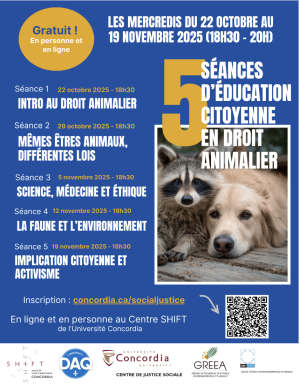
Fift session of the Citizen Education Series on Animal Law and Ethics (in French).
Co-organized by DAQ – Droit animalier Québec, the Concordia University Centre for Social Justice, the Environmental and Animal Ethics Axis of the Centre de recherche en éthique (CRÉ) and the GREEA – Research Group in Environmental and Animal Ethics.
This five-part series is open to everyone and will be held in French. You can attend in person or via videoconference by completing this online registration form.
Join us for a series of interactive talks designed to help you better understand the complex issues at the intersection of animal law and ethics. Through discussions, case studies, and collaborative exchanges, we’ll explore the laws that govern different groups of animals, their limitations, and the broader ethical challenges they raise.
Spots are limited — register here!
-
Droit de la faune et de l’environnement @ SHIFT, Pavillon J.‐W.‐McConnell, Concordia, hybrid
18 h 30 – 20 h 00
Fourth session of the Citizen Education Series on Animal Law and Ethics (in French).
Co-organized by DAQ – Droit animalier Québec, the Concordia University Centre for Social Justice, the Environmental and Animal Ethics Axis of the Centre de recherche en éthique (CRÉ) and the GREEA – Research Group in Environmental and Animal Ethics.
This five-part series is open to everyone and will be held in French. You can attend in person or via videoconference by completing this online registration form.
Join us for a series of interactive talks designed to help you better understand the complex issues at the intersection of animal law and ethics. Through discussions, case studies, and collaborative exchanges, we’ll explore the laws that govern different groups of animals, their limitations, and the broader ethical challenges they raise.
Spots are limited — register here!
-
Philosophical Perspectives on Values and Mental Health @ C-1017-02, Carrefour des arts et des sciences, Pavillon Lionel-Groulx, Université de Montréal
6 Nov – 7 Nov All day
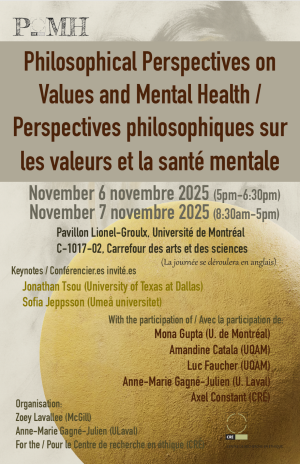
Conference on Philosophical Perspectives on Values and Mental Health
The event will now be held in hybrid format to accommodate those affected by the STM strike. To access the Zoom link, click here.
Program
Thursday, November 6
5:00pm – 6:30pm – Keynote presentation
“Cross-Cultural Human Kinds and the Naturalness of Social Categories” – Jonathan Y. Tsou (Professor of Philosophy, University of Texas at Dallas)
Commentary: Matthew Valiquette (Department of Philosophy, McGill University)
Friday, November 7
8:30 – 9:00: Coffee, pastries, and welcome
9:00 – 9:50: “Advancing the debate about MAiD for persons with MD through the Values in Science Framework” – Mona Gupta (Département de Psychiatrie et d’Addictologie, Université de Montréal)
10:00 – 10:50: “Personomics: Leveraging digital and computational phenotyping towards a person centered precision psychiatry” – Axel Constant (Department of Engineering and Informatics, University of Sussex)
10:50 – 11:20: Coffee Break
11:20 – 12:10: “How Should We Frame Autism? An Ameliorative Proposal” – Amandine Catala (Chaire de recherche du Canada sur l’injustice et l’agentivité épistémiques – Canada Research Chair on Epistemic Injustice and Agency, Département de philosophie – Department of Philosophy, Université du Québec à Montréal)
12:10 – 1:10 pm: Lunch
1:10 – 2:00 pm: “Values and first-person accounts in mental health” – Anne-Marie Gagné-Julien (Faculté de philosophie, Université Laval)
2:10 – 3:00 pm: TBD – Luc Faucher (Département de philosophie, Institut Santé et Société, Université du Québec à Montréal)
3:00 – 3:20 pm: Coffee Break
3:20 – 4:50 pm: Keynote presentation
“Mental health, suffering and value” – Sofia Jeppsson (Department of Historical, Philosophical and Religious Studies, Umeå University
Commentary: Sarah Arnaud (Cégep Édouard-Montpetit, Centre de recherche en éthique)
Organization: Zoey Lavallee (McGill) and Anne-Marie Gagné-Julien (ULaval) for the Centre de recherche en éthique (CRÉ) and the Groupe de recherche en philosophie de la santé mentale (POMH).
-
Science, médecine et éthique @ SHIFT, Pavillon J.‐W.‐McConnell, Concordia, hybrid
18 h 30 – 20 h 00
Third session of the Citizen Education Series on Animal Law and Ethics (in French).
Co-organized by DAQ – Droit animalier Québec, the Concordia University Centre for Social Justice, the Environmental and Animal Ethics Axis of the Centre de recherche en éthique (CRÉ) and the GREEA – Research Group in Environmental and Animal Ethics.
This five-part series is open to everyone and will be held in French. You can attend in person or via videoconference by completing this online registration form.
Join us for a series of interactive talks designed to help you better understand the complex issues at the intersection of animal law and ethics. Through discussions, case studies, and collaborative exchanges, we’ll explore the laws that govern different groups of animals, their limitations, and the broader ethical challenges they raise.
Spots are limited — register here!
Les places sont limitées, inscrivez-vous ici.
-
“Epistemic Occlusion” @ Room 309, hybrid
12 h 00 – 13 h 15

As part of the CRÉ Lunch Talks, Abe Tobi will give a presentation entitled “Epistemic Occlusion.”
To join via Zoom, click here.
Abstract
I introduce the concept of epistemic occlusion to describe a form of epistemic harm that occurs
when certain knowledges, frameworks, or epistemic agents are systematically rendered invisible
within dominant epistemic practices, not through active silencing or exclusion, but through
processes that pre-emptively block their recognition. Unlike testimonial strands of epistemic harms,
which concern the unfair downgrading of a speaker’s credibility, or hermeneutical strands, which
arise from gaps in collective interpretive resources, epistemic occlusion names a prior and more
elusive mechanism. It is a structurally produced condition in which certain knowledges or epistemic
agents are rendered imperceptible. I argue that epistemic occlusion operates through mechanisms
that shape what is seen, taken seriously, or even conceivable as knowledge. -
The Dynamics of Epistemic Injustice (OUP, 2025) @ Information to be shared after registration
All day

Roundtable on the book The Dynamics of Epistemic Injustice: situating epistemic power and agency (OUP, 2025), by Amandine Catala (CRC-IAE, UQAM).
Registration required, before October 15. The address will be given to you by email before the event.
Program:
9.00-9.30: Welcome and coffee
9.30-10.40: Panel 1 – Ch. 1-2 – Chair: Kristin Voigt (McGill, CRÉ)
– Amandine Catala (CRC-IAE, UQAM): “A Very Brief Synopsis of The Dynamics of Epistemic Injustice”
– Gaile Pohlhaus (Miami U, Ohio): “Shifting our Understanding of Epistemic Agency”
– Natalie Stoljar (McGill): “Comments on ch. 2: ‘Stereotypes and Testimonial Domination: A Structural Explanation of Epistemic Agency’”
– Amandine Catala: Response to Comments
10.40-11.00: Coffee break
11.00-12.10: Panel 2 – Ch. 3-4 – Chair: Anne Iavarone-Turcotte (McGill, CRC-IAE)
– Gilles Beauchamp (CRC-IAE, CRÉ, CRIDAQ): “Comments on ch. 3: ‘Deliberative Impasses, White Ignoring, and Hermeneutical Domination’”
– Yann Allard-Tremblay (McGill): “Comments on ch. 4: ‘Colonial Memory, Epistemic Aaordances, and Political Equality’”
– Amandine Catala: Response to Comments
12.10-12.30: Q & A with the audience
12.30-1.30: Lunch
1.30-2.40: Panel 3 – Ch. 5-6 – Chair: Corinne Lajoie (Western University, UQAM, CRC-IAE)
– José Medina (Northwestern U) “Linguistic Epistemic Injustice and Hermeneutical Death”
– Nick Clanchy (CRC-IAE, CRÉ): “Comments on ch. 6: ‘Becoming Who You Are: Hermeneutical Breakthroughs, Transformative Experience, and Epistemic Empowerment”
– Amandine Catala: Response to Comments
2.40-3.00: Coffee break
3.00-4.10: Panel 4 – Transversal Perspectives Transversales – Chair: Ryoa Chung (UdeM, CRÉ)
– Abe Tobi (CRC-IAE, CRÉ): “Hermeneutical Breakthroughs in The Dynamics of Epistemic Injustice”
– Alison Wylie (UBC): “The Implications of The Dynamics of Epistemic Injustice for Standpoint Theory”
– Amandine Catala: Response to Comments
4.10-4.30: Q & A with the audience
With the support of: CRC-IAE, CRÉ, GRIPP, CRIDAQ, FSH, UQAM Department of philosophy.
-
Mêmes êtres animaux, différentes lois – protections juridiques selon les espèces @ SHIFT, Pavillon J.‐W.‐McConnell, Concordia, hybrid
18 h 30 – 20 h 00
Second session of the Citizen Education Series on Animal Law and Ethics (in French).
Co-organized by DAQ – Droit animalier Québec, the Concordia University Centre for Social Justice, the Environmental and Animal Ethics Axis of the Centre de recherche en éthique (CRÉ) and the GREEA – Research Group in Environmental and Animal Ethics.
This five-part series is open to everyone and will be held in French. You can attend in person or via videoconference by completing this online registration form.
Join us for a series of interactive talks designed to help you better understand the complex issues at the intersection of animal law and ethics. Through discussions, case studies, and collaborative exchanges, we’ll explore the laws that govern different groups of animals, their limitations, and the broader ethical challenges they raise.
Spots are limited — register here!
-
Introduction au droit animalier – de biens meubles à êtres sentients @ SHIFT, Pavillon J.‐W.‐McConnell, Concordia, hybrid
18 h 30 – 20 h 00
First Session of the Citizen Education Series on Animal Law and Ethics (in French).
Co-organized by DAQ – Droit animalier Québec, the Concordia University Centre for Social Justice, the Environmental and Animal Ethics Axis of the Centre de recherche en éthique (CRÉ) and the GREEA – Research Group in Environmental and Animal Ethics.
This five-part series is open to everyone and will be held in French. You can attend in person or via videoconference by completing this online registration form.
Join us for a series of interactive talks designed to help you better understand the complex issues at the intersection of animal law and ethics. Through discussions, case studies, and collaborative exchanges, we’ll explore the laws that govern different groups of animals, their limitations, and the broader ethical challenges they raise.
Spots are limited — register here!
-
Workshop of the axis Ethics & Politics @ Room 309, hybrid
20 Oct – 21 Oct All day

Annual Workshop of the CRÉ – Ethics & Politics Research Axis
To participate via Zoom click here.
Program
October 20, 2025 (afternoon)
13:00 — Sylvie Loriaux (Université Laval) – “Les limites du consentement. Sur le rôle que peut et doit jouer le consentement en politique, au travail et dans la vie intime”
14:00 — Alia Al-Saji (U. McGill) – “Gaza as a Compass for Thinking: Searching for a decolonial phenomenological method that can do justice to debilitation and resistance in colonial duration”
15:00 — Christian Nadeau (UdeM) – “Responsabilité collective, complaisance politique et compromission politique.”
October 21, 2025 (morning)
09:00 — Arash Abizadeh (U. McGill) – “Social Power”
10:00 — Charles Blattberg (UdeM) – “Towards One, As Many”
11:00 — Juliette Roussin (U. Laval) – “Que fait exactement la mésinformation à la délibération démocratique?”
Organized by Christian Nadeau and Pablo Gilabert (Concordia University).
-
Conférences Hugues-Leblanc 2025: Magali Bessone, La justice réparatrice entre normativité et historicité: le cas Haïti @ UQÀM, local W-5215
14 Oct 10 h 00 – 15 Oct 12 h 00
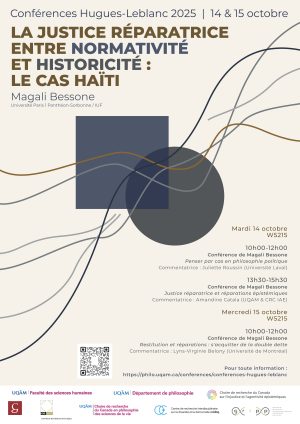
The invited speaker, Magali Bessone (Professor of Political Philosophy at Université Paris 1 Panthéon-Sorbonne & IUF), will give a series of three lectures, in French, on the theme: Restorative Justice Between Normativity and Historicity: The Case of Haiti.
Penser par cas en philosophie politique
Tuesday, October 14, 10:00 a.m.–12:00 p.m.
Commentator: Juliette Roussin (Laval)Justice réparatrice et réparations épistémiques
Tuesday, October 14, 1:30 p.m.–3:30 p.m.
Commentator: Amandine Catala (UQAM)Restitution et réparations : s’acquitter de la double dette
Wednesday, October 15, 10:00 a.m.–12:00 p.m.
Commentator: Lyns-Virginie Belony (Université de Montréal)All activities will take place in person at W-5215 (UQAM, Department of Philosophy, 455 Boulevard René-Lévesque East, Montreal, H2L 4Y2). Refreshments will follow the lectures as well as a light lunch on Tuesday.
The lectures will also be broadcast live on Zoom. In all cases, admission is free upon (mandatory) registration: https://uqam.zoom.us/meeting/register/HLXopPFWQ1-tfXLjIfzrrw
Event partners:
Chaire de recherche du Canada sur l’injustice et l’agentivité épistémiques
Chaire de recherche du Canada en philosophie des sciences de la vie
Centre de recherche en éthique (CRÉ)
Centre de recherche interdisciplinaire sur la diversité et la démocratie (CRIDAQ)
Faculté des sciences humaines (Vice-décanat à la Recherche), UQAM
Groupe de recherche interuniversitaire en philosophie politique (GRIPP)
Groupe de recherche interuniversitaire sur la normativité (GRIN)This annual lecture series commemorates the memory of the great Quebec logician and philosopher Hugues Leblanc (1924–1999). Spanning two days, the event is structured around a series of presentations delivered by an internationally renowned speaker, alongside contributions from professors from Canadian and foreign universities, on a theme pertaining to analytic philosophy.
-
GRIN Workshop: “Medicine and Philosophy: Reasoning from Specific Cases”
9 Oct 9 h 30 – 10 Oct 17 h 00
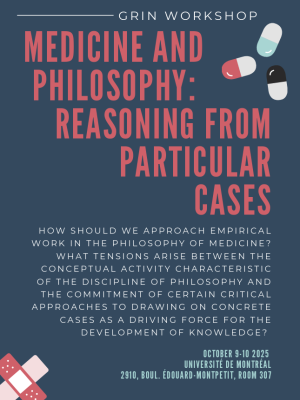
You are cordially invited to attend the workshop entitled “Medicine and Philosophy: Reasoning from Specific Cases,” which will be held on October 9-10, 2025, in room 307 at the Department of Philosophy at the University of Montreal, from 9:30 a.m. to 5:00 p.m., located at 2910 Édouard-Montpetit Boulevard, Montréal, Québec.
We will have the opportunity to hear from Aude Bandini (University of Montreal), Katrin Solhdju (University of Mons), Patrick Garon-Sayegh (University of Montreal), Luc Faucher (UQAM), and Miriam Solomon (Temple University), who will share their thoughts on this theme. The idea behind the workshop is to promote reflection and discussion on the epistemological and methodological contribution of reasoning based on specific cases in the philosophy of medicine.
Event Schedule:
Thursday, October 9, 2025
- 9:00 a.m.: Welcome
- 9:30 a.m.: Annejulie Charest, Léo Portelance (Université de Montréal), and Laurence Dufour, Presentation of themes and central ideas of the workshop
- 11:00 a.m.: Aude Bandini (Université de Montréal), “A Social Epistemology of “Experiential Knowledge”
- 12:30 p.m.: Lunch
- 2:00 p.m.: Katrin Solhdju (Université de Mons), “An “Assault on Reason” or an “At Last Rational Approach” to Therapeutic Thinking? The Case of Ethnopsychiatry”
Friday, October 10, 2025
- 9:30 a.m.: Patrick Garon-Sayegh (Université de Montréal), “On the Centrality of Case-Based Reasoning in Medicine”
- 11:00 a.m.: Luc Faucher (Université du Québec à Montréal), Titre à venir
- 12:30 p.m.: Lunch
- 2:00 p.m.: Miriam Solomon (Temple University), “The Philosophical Significance of Pivotal Cases”
To encourage maximum discussion and reflection, we invite you to write to the following email address to receive advance access to the workshop texts.
It will be possible to attend the workshop online via the following link.
We look forward to seeing many of you there.
*Please note that the event will be held in English.
-

*Please note that the event has changed locations and that it will now take place in Room A-3316 of the Hubert-Aquin Pavilion at UQÀM, located at 400 rue Sainte-Catherine Est, Montréal, Québec.
The Interuniversity Research Group on Normativity (GRIN) is pleased to welcome Miriam Solomon (Temple University), who will give a talk entitled “Stigma as an Actant in the History of Psychiatric Disorder”.
The conference will also be available via Zoom.
Abstract
The slogan “end the stigma” has become pervasive in mental health contexts. It makes a straightforward suggestion: if we can counter social prejudices about mental illness then we will be able to address mental illness more effectively and humanely. It is reminiscent of other medical-social movements such as the ones to reduce the stigma of breast cancer, beginning in the 1970s with Betty Ford’s openness about her own diagnosis and treatment and continuing with the work of advocacy groups such as Susan G. Komen and the National Breast Cancer Coalition to successfully fund and implement programs for early detection and intervention.
I signed on to “end the stigma” for mental illness a long time ago. However, in learning more about the history of mental health stigma, both in general and for particular conditions, I have found that stigma is a slippery beast that is often imperfectly managed by efforts that implicitly or unconsciously result in further stigmatization of some or all mental health conditions. It is not easy, and may not even be possible, to “end the stigma.” In addition, I have found that stigmatizing judgments run so deep that they have influenced professional judgments about the scope of psychiatric disorder and about the categories of psychiatric disorder. Stigma is not added to some neutral medical categories by a prejudiced society; rather, stigma was involved in making the categories themselves.
-
Katrin Solhdju (Université de Mons) @ Room 422, Philosophy Department, Université de Montréal, hybrid
10 h 00 – 12 h 00
The Interuniversity Research Group on Normativity (GRIN) is pleased to welcome Katrin Solhdju (Université de Mons), who will give a talk (in French) entitled: “Accept It! Or You’ll Be Branded Deviant: On the Violence of Misplaced Psychopathologization.”
The lecture will also be available via Zoom.
Abstract
“This patient doesn’t realize she’s dying.” “Dad keeps forgetting more and more things, but he insists it’s just age.” “I always say you can be overweight and healthy, but I panic every time I visit my cardiologist.”
Such statements may seem entirely reasonable and well-intentioned. Yet invoking denial in relation to a medical situation—implying a refusal or inability to understand, whether on the part of patients or their loved ones—is never neutral. The mere suggestion of illusion, irrationality, or cognitive distortion carries consequences: it can subtly transform the dynamics of care.
Indeed, when we assume that someone is improperly “attached” to reality, do we not risk undermining their standing as a free, autonomous, and fully competent subject? In this talk, I examine the effects of accusations of denial and the pervasive imperative to “accept” as an unquestionable norm. I argue that so-called denial may be less a psychopathological state than an instrument of power relations—and I explore possible forms of resistance to its coercive force.
-
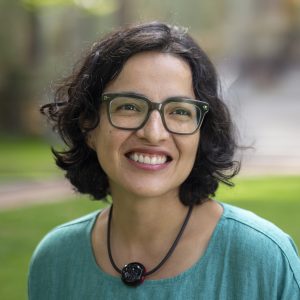
Jennifer Morton (University of Pennsylvania) will give a presentation entitled “Beyond ‘Bad Jobs’: Reconsidering Work’s Centrality” as part of the activities of the Philosophy of Work Network.
Abstract
In this paper, I argue that though precarity is objectionable, precarious work itself is not inherently so. I make a distinction between two types of work: terms-and-conditions precarious work and precarity-causing work. I contend that terms-and-conditions precarious work can be compatible with the conditions for flourishing. However, because work has become central to our access to many essential goods that contribute to our flourishing, terms-and-conditions precarious work does often lead to objectionable precarity. Therefore, I argue that we should be concerned not only with terms-and-conditions precarity but with the centrality of work in our lives.
The activities of the Philosophy of Work Network are open to researchers and graduate students with research interests in this area. Please write to the organizers, Denise Celentano (denise.celentano@umontreal.ca) and Pablo Gilabert (pablo.gilabert@concordia.ca), to receive the zoom link.
-
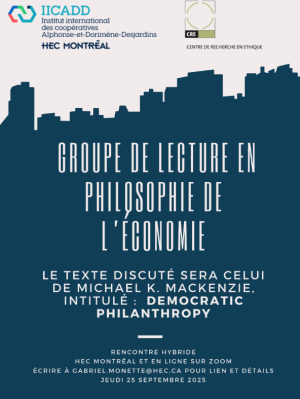
We are pleased to invite you to the philosophy and ethics of economics reading group, which will be held in hybrid format (Zoom) on Thursday, September 25, 2025, from noon to 1:30 P.M. (Montreal time). The meeting will take place in room 2.880 (space z), 2nd floor at HEC, 3000 Côte Ste-Catherine (in the conference rooms located in the Alphonse-et-Dorimène-Desjardins International Institute of Cooperatives at the end of the hallway next to the library).
For this session, we will discuss Michael K. MacKenzie’s text entitled “Democratic philanthropy”, published in Contemporary Political Theory (2020).
We hope to see many of you there, and would be delighted if you could share this invitation with anyone who might be interested.
To participate via Zoom, click here.
Organized by Nicolas Pinsonneault, Morgane Delorme and Gabriel Monette.