Past events
Calendar archives
-
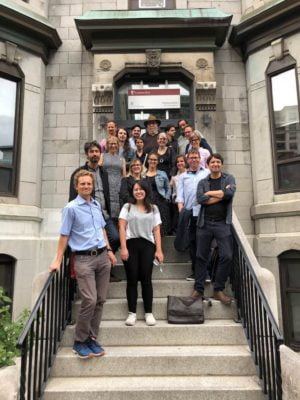
5th Social Justice Theory Workshop
10 Jun – 11 Jun All day

5th Social Justice Theory Workshop
[Montreal time]
It is a closed event.
June 10th
9h45 – Welcome
10h00-11h15 Anca Gheaus (Central European University): “Feminism without Gender Identity.”
Commentator: Amandine Catala (Université du Quebec à Montréal).11h30-12h45 Lisa Herzog (University of Groningen): “The epistemic-trust argument for social justice.”
Commentator: Natalie Stoljar (McGill University).13h30-14h45 Pablo Gilabert (Concordia): “Equality and Dignity.”
Commentator: Adam Hosein (Northeastern University).June 11th
9h45 Welcome
10h00-11h15 Miriam Ronzoni (University of Manchester): “Constructivist Justice as a Problem Solving Concept.”
Commentator: Julie Rose (Dartmouth College)11h30-12h45 Martin O’Neill (University of York) and Markus Furendal (University of Stockholm): “Justice and Collective Capital Institutions: Revisiting Rudolf Meidner, and the Case for Wage-Earner Funds.”
Commentator: Louis-Philippe Hodgson (York University).13h30-14h45 Peter Dietsch (Université de Montréal); “Endogenous comparative advantage and its implications for the incentives argument.”
Commentator: Joseph Heath (University of Toronto).Organizers: Peter Dietsch and Pablo Gilabert, for the Social Justice Centre and Centre de Recherche en Ethique.
-
“Qui en est responsable ? / Who’s Responsible for This?”
11 May – 12 May All day

The recipients of the 2020 Centre for Research on Ethics (CRE) scholarship are pleased to announce the CRE’s 3rd student annual conference entitled “Who’s Responsible for This?”, on Zoom plateform.
The conference will focus on various aspects of individual and collective responsibility as a concept, value, and principle, and on how these intersect with contemporary ethical theory and practice in all fields, including, but by no means limited to, philosophy, political science, human and animal health, and environmental science, among others.The program includes four guest speakers:
Phoebe Friesen who is, at McGill University, an Assistant Professor in the Biomedical Ethics Unit and the Department of Social Studies of Medicine.
Mona Gupta who is a psychiatrist at the Centre Hospitalier de l’Université de Montréal (CHUM) and a researcher in bioethics at the Centre de Recherche du Centre Hospitalier de l’Université de Montréal (CRCHUM) as well as a clinical associate professor in the Department of Psychiatry and Addictology at the Faculty of Medicine of the Université de Montréal.
Allison Marchildon who is a professor in the Department of Philosophy and Applied Ethics at the University of Sherbrooke.
Dale Jamieson who is a Professor of Philosophy and Environmental Studies at NYU College of Arts and Sciences
Summaries of the other presentations can be found here.
Organized by Emmanuel Cahen, Robert Dillon, Simon Goyer, Tierry M. Laforce, Sihem Neila Abtroun and Erika Olivaux.

-

Rencontre annuel des chercheur.se.s du CRÉ, du Parr et de la Chaire Hoover!
Co-organisé par Christine Tappolet, Sarah Stroud et Axel Gosseries.
Via Zoom.
Le programme préliminaire est le suivant:
Le 6 mai
Le 6 mai
9h00 Jules Salomone-Sehr (CRÉ), “Dissociated Agency: How to Φ at Will Without Intending to Φ”
10h00 Michael Prinzing (Parr), “Meaningfulness as Mattering: Can Insight be Gained by Exploring the Implications of a Platitude?”
11h00 Pause
11h15 Rodrigo Diaz (CRÉ), “The role of emotion in moral thought and action”
12h15 Fernanda Pérez Gay Juárez (CRÉ), “Belief in conspiracy theories throughout the COVID-19 crisis : An ethical approach to epistemic mistrust”
Le 7 mai
9h00 Niko Väänänen (Chaire Hoover): “Should pension (benefit) depend on the number of children?”
10h00 Denise Celentano (CRÉ), “When Your Boss Is an Algorithm: The Problem with the Re-Taylorization of Labor and Algorithmic Management”
11h00 Pause
11h15 Manuel Valente (Chaire Hoover) : “Two Types of Age-Sensitive Taxation”
12h15 Karl Martin Adam (Parr), “The Problem of Supererogation: A Rossian Response”
/home/lecreumo/public html/wp content/uploads/2021/03/poster copie
-
Les invisibles et inaudibles de la philosophie
4 May – 7 May All day

Dans le cadre du Congrès annuel de la SPQ, un événement intitulé “Les invisibles et inaudibles de la philosophie” sera l’occasion d’entendre une présentation plénière de Christine Tappolet, intitulée “L’indicible contenu des émotions”.
Participeront aussi au congrès: Gilles Beauchamp, “La marginalisation herméneutique et la Loi sur la laïcité de l’État”; Agnès Berthelot-Raffard, “Décoloniser les savoirs philosophiques: l’apport de la pensée féministe noire”; Denise Celentano, “Enjeux normatifs de la division du travail entre humains et robots sociaux : quelles tâches devraient être automatisées prioritairement ? Le cas des ‘nurse bots'”; François Claveau, “Philosophie(s) de l’économie? Une histoire bibliométrique”; Marc-Kevin Daoust, “La séparation des exigences, de Pareto à la cohérence formelle”; Morgane Delorme, “Souveraineté monétaire, propriété monétaire et enjeux distributifs”; Peter Dietsch, “Corriger une erreur capitale: vers une nouvelle économie de la taxation du capital”; Antoine C. Dussault, “Vers une conception holistique et fonctionnaliste de la pathologie”; Luc Faucher, “Le RDoC: dix ans plus tard”; Simon Goyer, “Une alternative à la conception du trouble mental des Research Domain Criteria”; Valéry Giroux, “Les perspectives antispécistes”; Alexandra Guité, “Emil Cioran et l’aspiration au détachement”; Dominic Martin, “La diversité des formes organisationnelles: un enjeu d’éthique économique”; Ernest-Marie Mbonda, “Décoloniser la philosophie. L’exemple des travaux sur l’Ubuntu dans l’espace académique sud-africain”; Erika Olivaux, “Care et réfugié.es : vers une analyse critique du régime d’asile”; David Robichaud et Patrick Turmel, “Qu’est-ce qu’un salaire juste?”; Mauro Rossi, “Le bien-être comme bonheur ‘approprié'”; Discussion “Aristote et la démocratie” avec la participation de Juliette Roussin et Patrick Turmel; ainsi que Jocelyne St-Arnaud, “Les “vérités parallèles” et la science en temps de pandémie”.
-

Cette seconde journée d’étude sur l’IA organisée par Martin Gibert, Hazar Haidar et Alexandra Prégent avec le Centre de recherche en éthique (CRÉ) et l’Observatoire international sur les impacts sociétaux de l’IA et du numérique (OBVIA) se veut un espace de réflexion autour des différentes manières de combiner éthique et programmation d’un système d’IA.
Avec la multiplication et le perfectionnement des systèmes mobilisant des algorithmes, il devient de plus en plus nécessaire de traduire des principes moraux en code informatique. Qu’il s’agisse de programmer un robot ou une application, l’éthique est convoquée pour analyser les enjeux de la programmation et évaluer les différentes options. On peut notamment penser aux dilemmes de voitures autonomes (comment la programmer en cas d’accident inévitable?) ou aux règles qui structurent le fil d’actualité de Facebook ou d’une recherche Google. Bref, il faut qu’on parle d’éthique des algorithmes.
Pour plus d’information.
HORAIRE DE L’ÉVÉNEMENT
8 h 55 MOT D’INTRODUCTION ET DE BIENVENUE: HAZAR HAIDAR
9 h Martin Gibert (U. de Montréal). Pourquoi l’éthique des algorithmes ?
9h30 Odile Bellenguez (IMT Atlantique). Conception de plannings : ce que les algorithmes optimisent
10h Karine St-Denis (U. Laurentienne). Le portrait composite : éthique et usage judiciaire de la génétique humaine10H30 PAUSE
10h50 Alexandre Bretel (Institut de Philosophie de Grenoble). L’apport de la notion de responsabilité d’Hans Jonas, Hannah Arendt et Gunther Anders à l’éthique des algorithmes
11h20 Andréane Sabourin Laflamme et Frédérick Bruneault (Collège André-Laurendeau). Quel rôle pour la soft ethics dans l’encadrement normatif des algorithmes : de l’éthique algorithmique au droit
11h50 Anne-Marie Boisvert (UQAM). Le problème du problème de la boîte noire12H20 PAUSE REPAS
13h30 FredericMarty (CNRS-GREDEG-Université Côte d’Azur) et Thierry Warrin (HEC Montréal, CIRANO). Plateformes numériques, algorithmes et éthique : une illustration par les enjeux liés aux ententes algorithmiques
14h00 Anne Boisly (U. de Montréal). Tensions en éthique des algorithmes : surveillance et protection de la vie privée
14h30 Jean-Christophe Bélisle-Pipon (Simon Fraser U.), Vincent Couture (U. Laval) et Marie-Christine Roy (U. de Montréal). L’exceptionnalisme de l’IA et l’évaluation des technologies de la santé15H00 PAUSE
15h20 Dominic Martin (UQAM) et Travis Lacroix (MILA). AI Human compatibility and Russell’s approach: What is the right Proxy for Artificial Moral Agency
15h50 Florian Manuch (U. Laval). Systèmes d’armes létaux autonomes : des impacts éthiques et juridiques
16h20 Audrey Durand (U. Laval), Dominic Martin (UQAM), Vardit Ravitsky (U. de Montréal) et Daniel Weinstock (McGill U.). Table ronde animé par Martin Gibert sur l’éthique des algorithmes
17H00 FIN
/home/lecreumo/public html/wp content/uploads/2021/01/cré obvia
-
Séminaire des boursier.e.s d’études supérieures du CRÉ – 1ère séance @ Zoom
13 h 00 – 16 h 00
 Vous êtes cordialement invité.e.s à la première séance du séminaire des boursier.e.s d’études supérieures du CRÉ 2020-2021.À tour de rôle, les boursier.e.s présenteront leur projet de recherche (environ 20-30 minutes) et une période de discussion s’ensuivra (30-40 minutes).
La rencontre sera tenue par zoom.
L’horaire proposé pour cette seconde demi-journée est le suivant :
13:00-14:00 Emmanuel Cahen. Maitrise sous la direction de Peter Dietsch en environnement et développement durable, à l’UdeM. Son projet s’intitule Quelle est la responsabilité individuelle et collective par rapport à la prolifération des algues bleu-vert (cyanobactéries)?
14:00-15:00 Erika Olivaux. Maitrise sous la direction de Ryoa Chung, en philosophie à l’UdeM. Sa présentation s’intitule Perspectives de l’éthique du care en philosophie de l’asile.
15:00-16:00 Robert Dillon. Maitrise sous la direction de Pablo Gilabert, en philosophie à Concordia. Sa présentation s’intitule Responsibilities of Identity: Epistemic Trustworthiness as Anti-colonial Praxis.
-
Atelier intitulé “Social Justice Theory Workshop”
Organisé par Pablo Gilabert (Concordia) et Peter Dietsch (UdeM).
Thursday, August 27, 9:00 – 16:15; Friday, August 28, 9:45 – 12:45.
The aim of the Social Justice Theory Workshop is to enable sustained exploration in the theory of social justice. It addresses topics such as the articulation of ideals and principles of economic, political, gender, race, environmental and cultural justice; the critique of inequality, domination, exploitation and alienation; and the illumination of political institutions, practices and processes of transformation that might foster progressive change. Workshop papers will be pre-circulated, and participation implies a commitment to reading the papers in advance.
List of Participants / Titles :
SPEAKERS
- Elvira Basevich (University of Massachusetts Lowell) “W.E.B. Du Bois’s Constructivist Theory of Justice”
- Lucas Stanczyk (Harvard University) “Ambedkar and DuBois’s Pragmatist Approach to the Caste Problem”
- Meena Krishnamurthy (Queen’s University) “Climate Change and the Structure of Intergenerational Justice”
- Amandine Catala (Université du Québec à Montréal) “Correcting a Capital Mistake: Towards a New Political Economy of Taxing Capital”
- Peter Dietsch (Université de Montréal) “Metaepistemic Injustice and Intellectual Disability: A Pluralist Account of Epistemic Agency”
- Pablo Gilabert (Concordia University) “Domination and Dignity”
COMMENTATORS:
- Agnes Tam (Concordia University)
- Daniel Weinstock (McGill University)
- Natalie Stoljar (McGill University)
- Jules Salomone-Sehr (Centre de Recherche en Éthique)
- Dominic Martin (Université du Québec à Montréal)
- Will Roberts (McGill University)
-
Journée d’étude en éthique de l’IA – L’intelligence artificielle entre philosophie et bioéthique @ Salle C-2059, Carrefour des arts et des sciences, Pavillon Lionel-Groulx, UdeM
All day

Le centre de recherche en éthique propose une journée d’étude sur l’intelligence artificielle intitulée : l’intelligence artificielle entre philosophie et bioéthique.
PROGRAMME
9 h 30 MOT DE BIENVENUE (Martin Gibert)
Martin Gibert. Comment programmer moralement un agent conversationnel ?
10 h 10 Erica Monteferrante. Détresse morale et intelligence artificielle
10 h 40 Christophe Abrassart. IA et climat : synergie ou contradiction ? Les termes du débat
11 h 10 PAUSE CAFÉ
11 h 40 Alexandra Prégent. Les problèmes sociaux de la transparence dans les SIA
12 h 10 Dominic Martin et Carl Mörch. The idea of moral competence in the scientific
literature: A critical review of a thin concept.
12 h 40 DÎNER
13 h 40 Frédérick Bruneault et Andréane Sabourin Laflamme. Les données massives
en santé à la lumière de l’éthique de l’information.
14 h 10 Jonathan Simon. What is it like to be AlphaGo?
14 h 40 PAUSE CAFÉ
15 h Bryn Williams-Jones. IA et innovation responsable : gouvernance par qui?
15 h 40 Philippe Beaudoin. Vers une IA digne de confiance, survol des lignes directrices
proposées par la commission européenne
16 h 10 Table ronde. Robots et humains: quels clivages moraux ?
Vardit Ravitsky, Jocelyn Maclure, Daniel Weinstock, Bryn Williams-Jones,
Philippe Beaudoin.
17 h MOT DE CLÔTURE (Martin Gibert)
Organisation: Martin Gibert, Hazar Haidar et Erica Monteferrante.
-

Social Justice Theory Workshop
Organized by the Social Justice Centre (Concordia University) and the Centre de Recherche en Éthique (CRÉ)
The aim of the Social Justice Theory Workshop is to enable sustained exploration in the theory of social justice. It addresses topics such as the articulation of ideals and principles of economic, political, gender, race, environmental, and cultural justice; the critique of inequality, domination, exploitation, and alienation; and the illumination of political institutions, practices, and processes of transformation that might foster progressive change.
Participation sur invitation seulement (our réserver une place: sjc@concordia.ca)
Affiche (.pdf)
Conférencier.e.s:
- Kristi Olson (Bowdoin College). Commentator: Louis-Philippe Hodgson (York University).
- Martin O’Neill (University of York, UK). Commentator: Dominique Leydet (Universite de Quebec a Montreal).
- Christine Sypnovich (Queen’s University). Commentator: Katharina Nieswandt (Concordia University).
- Nicholas Vrousalis (Leiden University). Commentator: Ben Laurence (University of Chicago).
- Peter Dietsch (Universite de Montreal). Commentator: Francois Claveau (Universite Sherbrooke).
- Pablo Gilabert (Concordia University). Commentator: Samuel Arnold (Texas Christian University).
Programme (.pdf)