
Past events
Calendar archives
-
“Santé et vécu carcéral féminins : l’expérience de la double peine ?” @ Room 309, UdeM, hybrid mode
12 h 00 – 13 h 15

In the Midis de l’éthique du CRÉ series, Julie Agnaou will be presenting on “Santé et vécu carcéral féminins: l’expérience de la double peine?” The presentation will be in French.
To participate online, via Zoom, clic here.
Abstract
he aim here is to focus on the health of incarcerated women in France, and more specifically on the obstacles to their access to healthcare. We’ll be asking whether the fact of being a woman subject to legal proceedings and/or incarcerated constitutes a double barrier to her right of access to healthcare. In other words, isn’t the female prison experience an extension of the prison sentence? We’ll be looking at inequalities in access to social and health care spaces and resources, as well as inequalities in access to and appropriation of knowledge.
-
Workshop on ‘Philosophy of Emotion’ (Routledge 2023), by Christine Tappolet @ Room B-4215, Pavillon Jean-Brillant, Université de Montréal
All day
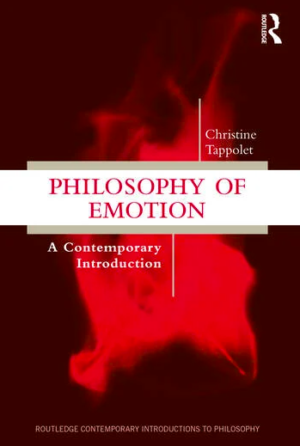
The CRÉ and GRIN are hosting a discussion workshop centered around the book The Philosophy of Emotion (Routledge, 2023) by Christine Tappolet, with the author in attendance.
To attend via Zoom, clic here.
*Comments will be delivered in English and the discussion will primarily be conducted in this language. However, participants are welcome to ask questions in French if they prefer.
Program
9:00 – 9:15: Reception, pastries and coffee
9:15 – 9:25: Welcome remarks by the CRÉ co-directors, Kristin Voigt & Ryoa Chung, and by the GRIN director, Aude Bandini
9:25 – 9:50: Brief presentation of the book by Christine Tappolet, UdeM
9:50 – 10:15: Commentary on Chapter 1 (‘The Philosophy of Emotions’) by Alex Carty, McGill
10:15 – 10:40: Commentary on Chapter 2 (‘The Affective Domain’) by Rodrigo Diaz, CRÉ
10:40 – 11:05: Commentary on Chapter 3 (‘Are Emotions Social Constructs?’) by Luc Faucher, UQAM
Break
11:25 – 11:50: Commentary on Chapter 4 (‘Feeling Theories’) by Manuel Vásquez, McMaster University
11:50 – 12:15: Commentary on Chapter 5 (‘Motivational Theories’) by Fabrice Teroni and Julien Deonna, U. of Geneva, via Zoom
Lunch
1:30 – 1:55: Commentary on Chapter 6 (‘Evaluative Theories’) by Miriam McCormick, Richmond College
1:55 – 2:20: Commentary on Chapter 7 (‘Emotions and Theoretical Rationality’) by Michael Milona, Ryerson U.
Break
2:40 – 3:05: Commentary on Chapter 8 (‘Emotions and Practical Rationality’) by Catherine Rioux, U. Laval, and Jules Salomone-Sehr (Zoom), U. of Oxford
3:05 – 3:30: Commentary on Chapter 9 (‘Sentimentalism’) by Max Lewis, CRÉ
Break
3:50 – 4:15: Commentary on Chapter 10 (‘Ethics and the Emotions’) by Mauro Rossi, UQÀM
4:15 – 4:40: Commentary on Chapter 11 (‘Emotion Regulation and Music’) by Ronald de Sousa, UofT
Break
5:00 – 5:25: Commentary on Chapter 12 (‘Sentimental Education and Fiction’) by Fernanda Pérez Gay Juárez, McGill
5:25 – 5:50: Commentary on what could have been the subject of a thirteenth chapter (political considerations – epistemic and practical – surrounding emotions) by Laura Silva, U. Laval -
« Mapping ethical, legal, & social implications (ELSI) of assisted reproductive technologies » @ Via Zoom
12 h 00 – 13 h 15

Ido Alon will present, via Zoom, the article entitled “Mapping ethical, legal, & social implications (ELSI) of assisted reproductive technologies“, which he co-authored with Zacharie Chebance, Francesco Alessandro Massucci, Theofano Bounartzi and Vardit Ravitsky , and appeared in the Journal of Assisted Reproduction and Genetics.
To participate on Zoom, it’s here.
-
Présentation sur la notion d’intelligence @ Room 309, hybrid mode
12 h 00 – 13 h 15

As part of CRÉ’s series “Les Midis de l’Éthique”, Martin Gibert will offer a presentation on the notion of intelligence in its broadest sense (human, artificial, animal, plant, general…).
To participate by Zoom, click here.
-
« On the Possibility of Intergenerational Legitimacy » @ Salle 309, 3e étage, UdeM - mode hybride
12 h 00 – 13 h 15

Emil Andersson will give us a presentation titled “On the Possibility of Intergenerational Legitimacy”, in the Midis de l’éthique series at the CRÉ.
To participate by Zoom, it’s here.
-
Carolyn McLeod (Western University) @ Leacock Building, McGill University, Room 927
15 h 30 – 17 h 30
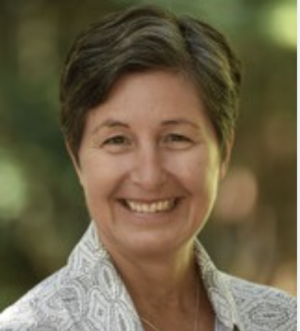
Carolyn McLeod (Western University) will give a talk entitled “Trust and Belonging,” for McGill University’s Philosophy Colloquium Series, directed by Stephanie Leary.
Abstract
Philosophers have long recognized the value of trust for cooperation. They understand that being able to trust one another allows us to do what none of us could do singly, and to do it efficiently, without constantly having to check up on one another. Some philosophers have argued that the very concept of trust exists because of our need as human beings to cooperate—that its genealogy lies in this fact about us (see Jones 2017, 2012; Simpson 2012; Faulkner 2007). I argue in this paper that the genealogy of trust is more complicated than this picture suggests. According to the view I defend, the concept of trust came about because of the human need for belonging as well as the need for cooperation.
-
Gabriele Contessa (Carleton University) @ Room: W-5505, 5th floor, Pavillon Thérèse-Casgrain (W), UQAM
10 h 00 – 12 h 00

‘Public Trust in Science and the Justification Dilemma’
Conference by Gabriele Contessa (Carleton University)
*The conference will also be presented on Zoom.
Abstract:
Over the last couple of decades, a growing number of academics and commentators have become increasingly concerned about expanding pockets of mistrust of science among the publics of liberal democracies. In order to address these concerns, however, we need an adequate account of public trust in science. In this talk, I argue that the dominant individualistic approach to public trust in science, which takes public trust in science to be a trust relationship in which individual citizens are the primary trustors, is inadequate and that it should be replaced with what I call a social approach, which takes groups to be the primary trustors. I present a dilemma for the individualistic approach. If we set the bar low enough for ordinary people who trust science to be justified in their trust, then we must conclude that many cases of mistrust of science are also justified; but, if we set the bar so high that most cases of mistrust are not justified, then no ordinary people can have justified trust in science. The social approach takes the second horn of this dilemma. It maintains that, individually, most of us are not justified in trusting science (except, possibly, in a derivative sense) but that, nevertheless, some of us are part of a community that is collectively justified in trusting science. Our focus should therefore not be on how to persuade those who do not trust science to trust it but in building communities that are collectively justified in trusting it.
-
‘La religion au tribunal de la raison’, by Astrid Von Busekist (Paris Science Po) @ Room 422, UdeM, hybrid mode
13 h 00 – 15 h 00

On the occasion of Astrid Von Busekist’s (Paris Science Po) research stay at CRÉ, we will hold a symposium on her book La religion au tribunal (Albin Michel, 2023). The activity will be conducted in the presence of the author and respondents Marc-Antoine Dilhac (UdeM), Victor Muniz-Fraticelli (McGill), Christian Nadeau (UdeM) et Daniel Weinstock (McGill). The event will be hosted by Ryoa Chung (UdeM).
To participate via Zoom, click here.
Book Summary
“Homeschooling, circumcision, religious divorce. Against the common belief that the political and religious could not work together without upsetting the principle of separation, this book demonstrates that the interactions between state law and religious commands are more complex. The State, sensitive to unique situations, can show flexibility and accommodate the belief obligations of individuals. Attentive to the integrity of believers, it can even occasionally cooperate with representatives of religious communities. This book examines three cases where the confrontation between civil and religious is resolved by unique arbitration between public virtues and individual freedoms. Not to harm individual religious freedom or the making of a democratic citizen? To bodily integrity or civic inclusion of minority communities? To religious freedom or democratic equality between women and men? A sometimes thwarted alloy between democracy and liberalism, deliberalism, a doctrine of the right measure, attempts the bet to paint a more flexible, more pragmatic picture than the idea of separation between the common good and the unique aspirations of believers suggests.”
About the Author
“Astrid von Busekist is a Professor of Political Theory at Sciences Po and the director of the journal Raisons Politiques. She has published, among others, at Albin Michel, Portes et murs. Des frontières en démocratie (2016) and Penser la justice. Entretiens avec Michael Walzer, 2020.”
-
Jonathan Martineau (Concordia) and Jonathan Duran Folco (Saint Paul) @ Salle 309, UdeM, mode hybride
12 h 00 – 13 h 30
 Lunchtime Lecture titled “Algorithmic Capital, Experience of Time, and Virtue Ethics.” Jonathan Martineau (Concordia University) and Jonathan Duran Folco (Saint Paul University) will present their book Le Capital Algorithmique (Écosociété 2023).To participate via Zoom, click here.
 -
Jens Gillessen (Philipps-Universität Marburg, Allemagne) @ Salle 309, UdeM, mode hybride
12 h 00 – 13 h 15

While in Montreal to participate in the Moral Theory and the Challenge of Future People conference, Jens Gillessen (Philipps-Universität Marburg) will offer us a presentation entitled “Probable Burdens in Moral Contractualism”.
To participate via Zoom, click here.
-
Moral Theory and the Challenge of Future People @ Seminar room of the Bieler School of Environment, McGill University
27 Oct – 28 Oct All day

Emil Andersson (McGill University) and Iwao Hirose (McGill University), for the research team in Value Theory and the Philosophy of Public Policy at McGill University, will host a two-day conference on the moral challenge of future people, broadly construed.
Program:
9:00 am Welcome (Friday, October 27)9:15 am Jens Gillessen (Marburg): “Moral Contractualism and Potentially Future People”10:30 am Break10:45 am Ingrid V. Albrecht (Lawrence): “Partiality and Future People”12:00 Lunch2:00 pm Michal Masny (Berkely): “Extension and Replacement”3:15 pm Break3:30 pm Anja Karnein (Binghamton): ”Cooperation Across Time”9:00 am Welcome (Saturday, October 28)9:15 am Per Algander (Umeå): “The Intuition of Neutrality and Deontic Stability”10:30 am Break10:45 am Beth Hupfer (High Point): “From Bednets to Rocket Ships: Efficiency in the Long-Term and Neglect for the Present”12:00 Lunch2:00 pm Giacomo Floris (York): “Intergenerational Moral Inequality and the Long-Term Future”3:15 pm Break3:30 pm Emil Andersson (McGill): “On Skepticism about Intergenerational Legitimacy”Registration:
This workshop is open for everyone. But registration is required as the space is limited. To register, please send an email, no later than October 20, to Emil Andersson: emil.andersson@mail.mcgill.caPresentation:
As John Rawls once remarked, the question of justice between generations “subjects any ethical theory to severe if not impossible tests”. One of the difficulties is, of course, to correctly determine what our duties of justice towards future people are. But for social contract theory, where justice is understood as the fair terms of cooperation among the participants of a joint practice, the more fundamental challenge is to make sense of the very idea of intergenerational cooperation. If justice requires some form or reciprocal cooperation, can our duties to future people really be duties of justice at all? Rather than a mere problem of extension, the case of future people puts the social contract approach as such into question.
However, though modern moral philosophy has confirmed the severity of the challenge, it has also shown that it goes well beyond the topic of intergenerational justice. In particular, the fact that our actions affect who will be born, and how many people there will be, raises deep questions for moral theory as such. It has proven to be extremely difficult to find a normative theory that not only successfully deals with the non-identity problem, but at the same time also avoids implausible results such as the repugnant conclusion. Thus, the challenge of future people not only raises difficult theoretical problems for the main approaches to moral theory – deontological as well as teleological ones – but also puts many of our most deeply held intuitions into question. An appreciation of the moral significance of future people may also lead to radical conclusions regarding what our most pressing political problems are, and what we ought to do.
-
“Consent, Pelvic Exams, and Medical Training” @ Leacock 232, McGill University
14 h 30 – 17 h 00

Medical students often learn to perform pelvic exams on anesthetized patients before gynecological surgeries. In some cases, explicit consent is not sought. Why is this happening? How should we respond?
This event will include a screening of the documentary film ‘At Your Cervix’ and a panel discussion, organized by Phoebe Friesen, at McGill University.
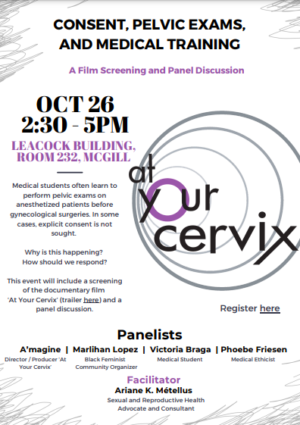
Register here.
View the trailer for ‘At Your Cervix’ here.
-
Charles Girard (Université Jean Moulin Lyon 3) @ Room 309, 3rd floor, UdeM - hybrid mode
12 h 00 – 13 h 30

Charles Girard (Université Jean Moulin Lyon 3) will give us a presentation devoted to freedom of expression entitled Paroles contre paroles. Les conflits internes à la liberté d’expression.
Commentator: Christian Nadeau; Chair: Marc-Antoine Dilhac.
To participate by Zoom, it’s here.
-
“Affective Injustice in Psychiatry” @ Room 309, 3rd floor, UdeM
12 h 00 – 13 h 15

Zoey Lavallee and Anne-Marie Gagné-Julien will give us a presentation for CRÉ’s lunch series “Les midis de l’éthique”.
More information to come.
To attend on Zoom, it’s here.
-
Artūrs Logins (Université Laval) @ Room W-5505, 5th floor, Pavillon Thérèse-Casgrain (W), UQÀM
10 h 00 – 12 h 00
Artūrs Logins (Université Laval) will give a presentation titled “Inquiry and Reasons” in the GRIN conferences series,
*The conference will also be presented on Zoom.
Abstract
Knowledge, certainty, and understanding are all plausible candidates for constituting
aims of genuine inquiry. However, a mere pluralist account of aims (and corresponding norms) of inquiry that lacks a more fundamental theoretical motivation is somewhat arbitrary. The aim of this paper is to provide further motivation for a pluralist approach. The key aspect of our proposal is to focus on the possession of sufficient reasons to believe as an overarching aim of theoretical inquiry. -
A look back on the Montreal Declaration on Animal Exploitation @ Palais des congrès, Montréal
13 h 00 – 13 h 45

On October 4, 2022, the Montreal Declaration on Animal Exploitation was launched, a text signed by more than 500 moral and political philosophers denouncing our use of animals. The philosophers Martin Gibert, Valéry Giroux and François Jaquet, who are the instigators, will present their approach and make an initial assessment during a round table held on the occasion of the 2023 edition of the Montreal Vegan Festival. The event organized by the Groupe de recherche en éthique environnementale et animale (GRÉEA), in partnership with the Festival, will take place on October 1, 2023, at the Palais des congrès in Montréal.
-
-
Anat Rosenthal (Ben-Gurion University of the Negev) @ Room 1135, 11th floor, McGill - hybrid mode
15 h 00 – 16 h 30

Anat Rosental (Department of Health Policy and Management, Ben-Gurion University of the Negev) will give us a presentation entitled “Now what? Global health between COVIDs”.
To register and participate either in person of via Zoom, please click here.
Abstract
Almost four years into COVID-19, the dust is settling on the impact of the pandemic on global health theory and practice, and the lessons (not)learned. Drawing from ongoing research projects, and personal observations and frustrations, this paper reflects on global health as an analytical framework and worldview through the lens of the impact of the COVID-19 pandemic on notions of the global community, history’s lessons, and solidarity.
-
Wlodek Rabinowicz (Lund University) @ Salle/Room Leacock 927, McGill University
10 h 00 – 12 h 00
Goodness and Numbers
Conférence par/Conference by Wlodek Rabinowicz (Lund University)
*La conférence sera aussi présentée sur Zoom. /The conference will also be presented on Zoom.
Meeting ID: 266 439 5811Passcode: 454185Abstract/Résumé:
You can save either David or Peter and Mary. Is there a compelling reason to save more people rather than fewer? Taurek (1977) (in)famously denied it. One might attempt to establish that is better if more people survive. This would settle the issue for consequentialists, but even non-consequentialists might find it relevant to the question at hand. The standard worry, however, is that such an axiological claim can only be established by aggregating gains and losses of different persons. As opposed to intrapersonal aggregation, interpersonal aggregation might seem illegitimate. Frances Kamm’s Aggregation Argument is meant to overcome this difficulty. I consider how her argument is dealt with by Iwao Hirose and Weyma Lübbe, and what is wrong with it from Taurek’s own perspective. But then I suggest that this perspective is untenable: while Taurek correctly analyses the concept of ‘better’ in terms of fitting attitudes, he accounts for fittingness in terms of the wrong kind of reasons. Still, even so, the Aggregation Argument fails, but a closely related argument may well be acceptable. That argument takes into consideration that different persons’ lives, unless they dramatically differ, typically are incommensurable in value – on par, rather than equally good.
-
Lauren Freeman (U. of Louisville) @ Salle 422, 4e étage, UdeM - mode hybride
13 h 00 – 14 h 30
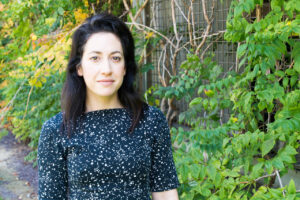
CRÉ and The Canada Research Chair on Epistemic Injustice and Agency are pleased to welcome Lauren Freeman (University of Louisville) who will be in Montreal to give us a presentation entitled “Switching the Script: A Harm Based Account of Microaggressions (in Medicine)”.
To participate via Zoom, it’s here.