Past events
Calendar archives
-
CRÉ 2024-2025 Scholarship Graduate Scholars Recipient Seminar – 1st session @ Room 309, CRÉ, hybrid, 2910 Edouard-Montpetit, Montreal
13 h 00 – 16 h 00

You are warmly invited to the 1st session of the CRÉ Graduate Scholars Seminar 2024-2025. In turn, three of the six CRÉ scholarship recipients will present their work. The goal of the seminar is to provide our master’s and doctoral students with feedback, constructive criticism, and recommendations that will help them improve their research projects.
We propose the following program:
13h – 13h50. Presentation by Nicolas Lacroix, Démocratie insurgeante et mouvements sociaux.
13h50 – 14h. Break
14h – 14h50. Presentation by Clara Dallaire, Curriculum caché en éducation médicale : Recherche-intervention pour le développement d’un outil réflexif participatif.
14h50 – 15h. Break
15h – 15h50. Presentation by Valérie Lafond, L’impact des injustices structurelles sur la vulnérabilité des personnes face aux conséquences de la crise climatique.
To participate on Zoom, click here.
The second session will be held in March 2025.
-
“The Ethics of Publishing in Academic Journals”, Arash Abizadeh @ Room 309, CRÉ, hybrid, 2910 Édouard-Montpetit, Montréal
12 h 00 – 13 h 15

As part of the Ethics Lunchtime Series, Arash Abizadeh will give a talk entitled “The Ethics of Publishing in Academic Journals”.
To join on Zoom, click here.
-
“The Grounds of Moral Status: Sentience and (a bit) Beyond”, Will Gildea @ Room 309, CRE, hybrid
12 h 00 – 13 h 15

In our Midi de l’éthique series, Will Gildea will offer a presentation titled The Grounds of Moral Status: Sentience and (a bit) Beyond.
To join via Zoom, click here.
-
Pierre André (Université catholique de Louvain) @ Online
12 h 00 – 13 h 00
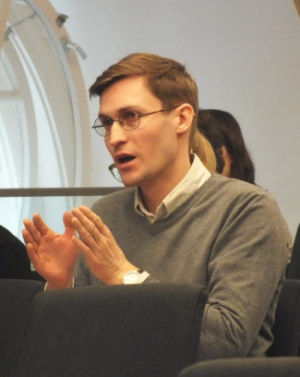
On Tuesday, January 28, 2025, from 12:00 p.m. to 1:00 p.m., Pierre André (Université catholique de Louvain) will give a presentation* on his new book La Justice climatique, co-written with Axel Gosseries (Université catholique de Louvain).
With a doctorate in philosophy, Pierre André also has a background in political science and management. Formerly an FNRS research fellow, he is currently guest lecturer at the Hoover Chair of Economic and Social Ethics at the Université de Louvain and at the Frankfurt School of Finance & Management.
The presentation is organized by Juliette Roussin (Université Laval) for the Groupe de recherche interuniversitaire et interdisciplinaire en éthique environnementale et éthique animale (GRÉEA) and the Centre de recherche en éthique (CRÉ).
To participe, click here. Please note the password for the Zoom meeting: 940004.
*The event will take place in French.
-
POSTPONED – “Localizing Knowledge in Sustainability Discourse”, Olusegun Samuel @ Room 309, CRÉ, hybrid mode
12 h 00 – 13 h 15
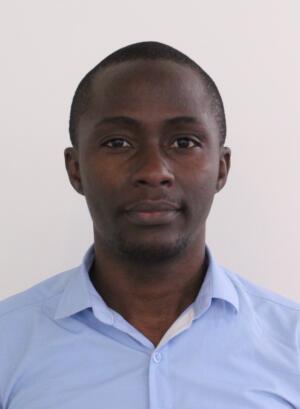
Midis de l’éthique series: Olusegun Samuel will present his work in progress. He will give a presentation entitled “Localizing Knowledge in Sustainability Discourse”
To participate via Zoom, clic here.
-
“Avoiding Taking Responsibility for Access”, Corinne Lajoie @ Room 309, CRÉ, hybrid, 2910 Edouard-Montpetit, Montreal
12 h 00 – 13 h 15

As part of the Ethics Lunchtime series, Corinne Lajoie will give a presentation titled “Avoiding Taking Responsibility for Access.”
The presentation will be chaired by Anne-Marie Gagné-Julien.
To join on Zoom, click here.
-
“How Beliefs Harm”, Abraham Tejiri Tobi @ Room 309, CRÉ, hybrid
12 h 00 – 13 h 15

As part of the CRÉ Midis de l’éthique Series, Abraham Tejiri Tobi will present a talk entitled ‘How Beliefs Harm.’
To join via Zoom, click here.
-
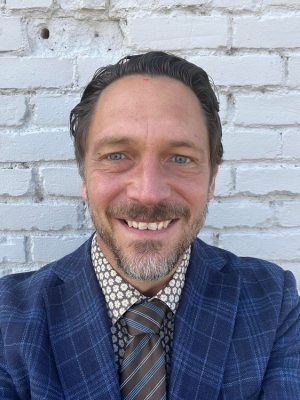
As part of the activities of the Philosophy of Work Network, Joshua Preiss (University of North Carolina, Chapel Hill) will offer a presentation entitled: “The Moral and Political Importance of Good Jobs”. To attend the talk, click here.
The activities of the Philosophy of Work Network are open to researchers and graduate students with research interests in this area. They are organized by Denise Celentano (denise.celentano@umontreal.ca) and Pablo Gilabert (pablo.gilabert@concordia.ca).
Abstract: This paper connects the political, business, and policy discourse on good jobs with recent philosophy of work, bringing philosophical analysis to bear on a defining moral and political challenge for our time. My teleological account of good jobs provides a normative lens for understanding the economic transformations of wealthy democratic societies the past half century, the crisis of liberal democracy that has resulted from these transformations, and what, at minimum, needs to be done about it. Good jobs, on this account, enable workers to cross a context-relevant threshold of compensation, status, and power. In addition, I argue that a focus on good jobs does not entail fetishizing paid work or endorsing the proliferation of so-called bullshit jobs (despite the fact that the later often provide significant compensation, status, and power). Even those who envision a future with little to no paid labor can recognize a basic moral and political imperative: restoring the promise that through hard work people can build a better life for themselves, their families, and their communities. Good jobs provide the fuel for democratic norms and institutions and give ordinary workers the power they’ll need to secure a free and inclusively prosperous future with less paid work.
-
“Citizenship beyond sedentariness” @ Room 309, CRÉ, hybrid mode
12 h 00 – 13 h 15

As part of the CRÉ Midis de l’éthique Series, Anna Milioni will present a talk entitled ‘Citizenship beyond Sedentariness.’
To join via Zoom, click here.
Abstract
A powerful argument against the exclusion of migrants from citizenship rights suggests that this exclusion leads to the formation of a political underclass that undermines equality within the state. In response to this critique, it is often argued that citizenship is permissibly exclusionary. Political communities, the argument goes, have a right to determine who gets access to citizenship, at least within certain limits: while it is generally considered impermissible to exclude people on the basis of their racial identity, ethnic origin, or social class, access to citizenship can permissibly be conditional upon the fulfillment of other requirements, such as a minimum period of residence or a citizenship test. This paper scrutinizes three supposedly innocuous requirements for naturalisation: minimum residence requirements, citizenship tests set at a modest level of difficulty, and loyalty oaths. I hold that these conditions only seem innocuous insofar as we assume that people are predominantly sedentary, and that even people who migrate ultimately settle in their new state of residence. Yet, these assumptions have been criticised as being both empirically mistaken and potentially exclusionary toward those who do not fall within the sedentary paradigm. Taking this critique seriously, I show that minimum residence requirements (section 1), citizenship tests (section 2), and loyalty oaths (section 3) only seem
to be innocuous because of these background assumptions of sedentariness. Once we drop the assumption that people who migrate settle permanently in their new state of residence, and we switch our focus to the many ways in which people can be mobile, these conditions cease to appear permissible. I begin by bringing to the fore various types of mobile migrants, i.e., migrants who do not have the intention and/or the legal right to settle permanently in their current state of residence. This focus on mobility allows me to show how each of these conditions rely on assumptions of sedentariness that prevent various types of mobile migrants from accessing citizenship (sections 1-3). I then argue that residence requirements, citizenship tests, and loyalty oaths violate are impermissible, as they violate two standardly accepted conditions for exclusionary migration policies: that they are publicly justifiable to migrants and that they are not discriminatory (section 4). In the final section, I explore the implications of my argument for citizenship (section 5). -
RESCHEDULED – “Le fossé de responsabilité dans le contexte des systèmes artificiels” @ Room 309, CRÉ, hybrid
12 h 00 – 13 h 15

As part of the Ethics Lunchtime Series, Thomas Emmaüs Adetou will present his work on the responsibility gap in the context of artificial systems.
The event, originally scheduled for 10 December 2024, has been postponed.
-
“Roland Barthes on the Epistemic Demands of Love” @ Room 309, CRÉ, hybrid
12 h 00 – 13 h 15

As part of the Ethics Lunchtime series, Nick Clanchy will give a presentation titled “Roland Barthes on the Epistemic Demands of Love.”
To join via Zoom, click here.
Photo by Ulf Andersen/Getty Images.
-
“Penser le corps en féministe. L’expérience vécue du corps enceint” by Camille Froidevaux-Metterie @ Carrefour des arts et des sciences (salle C-3061, pav. Lionel-Groulx), Université de Montréal
12 h 30 – 14 h 30
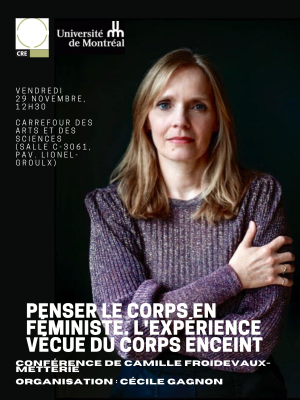
Dans le cadre du cours Philosophie féministe (PHI 2419), enseigné par Cécile Gagnon, le Centre de Recherche en Éthique a le plaisir de vous convier à une conférence de Camille Froidevaux-Metterie, le vendredi 29 novembre, à 12h30 au Carrefour des arts et des sciences (salle C-3061, pav. Lionel-Groulx) intitulée Penser le corps en féministe. L’expérience vécue du corps enceint.
Camille Froidevaux-Metterie est une philosophe, romancière et professeure de science politique.Ses travaux portent sur les transformations de la condition féminine à l’époque contemporaine, dans une perspective phénoménologique qui place la question du corps au centre de la réflexion. Celle-ci est axée sur la réappropriation par les femmes de leur corps telle qu’elle s’exprime dans les mouvements récents de la lutte féministe portant sur des enjeux liés à l’intime et à la génitalité féminine.
-
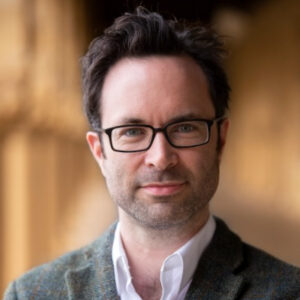
As part of the activities of the Philosophy of Work Network, Jan Kandiyali (Durham University) and Barry Maguire (University of Edinburgh) will offer a presentation entitled: “Socialism and Collective Ownership of the Means of Production”.
The activities of the Philosophy of Work Network are open to researchers and graduate students with research interests in this area. Please write to the organizers, Denise Celentano (denise.celentano@umontreal.ca) and Pablo Gilabert (pablo.gilabert@concordia.ca), to receive the zoom link.
Abstract
Historically, socialism has been identified with collective ownership of the means of production. However, in the face of the failure of central planning, and influential arguments about the necessity of markets and private ownership, many contemporary socialists have sought to sever the link between socialism and collective ownership. The socialists we have in mind define socialism exclusively in terms of a set of values, usually some form of robust equality of opportunity, and then see the question of what form of economic organisation realises those values as entirely separate. In this paper, we reject this decoupling of socialism from collective ownership. Our argument has two steps. In the first, we outline an important but nowadays underappreciated value, namely that of solidarity or mutual care, understood as the positive counterpart to productive alienation, and argue that this, rather than robust equality of opportunity, is the heart of the socialist ideal. The ideal of solidarity is one in which we all care about one another, and care that we care about one another. In the second, we show that solidarity is partly constituted by collective ownership of the means of production.
-
Miklós István Zala (Aarhus University) @ Room 309, UdeM, hybrid
12 h 00 – 13 h 30
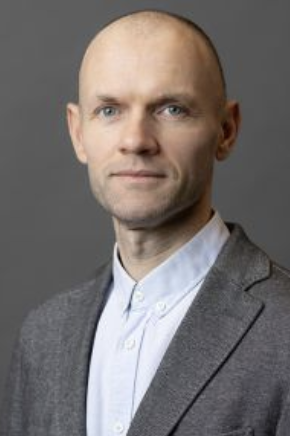
The CRÉ is pleased to welcome Miklós István Zala (Aarhus University), who will be giving a presentation titled ‘Justice and Social Responsibility for Causing Disability Disadvantage.’ The event will be moderated by Hugo Cossette Lefebvre (Aarhus University). The presentation will last approximately 40 minutes and will be followed by a general discussion.
To participate via Zoom, click here.
AbstractThe social model of disability holds that society makes people with impairments disabled; that is, the social model makes a causal claim. However, some commentators are skeptical about the usefulness of the social model’s causal analysis (see Samaha 2007). Sean Aas and David Wasserman (2016) provide a forceful argument for why such a causal analysis is important: if society causes disability disadvantage, eliminating or mitigating such disadvantage has a higher priority vis-à-vis other disadvantages society did not cause. Their starting point is Nagel’s 1997 paper “Justice and Nature.” Nagel holds that society is not responsible for those disadvantages it did not cause. While Aas and Wasserman acknowledge that Nagel’s essay makes steps in the right direction regarding social responsibility, they rightly reject his radical narrowing of the purview of justice. They especially disagree with Nagel that society bears no responsibility for disadvantages if they are the unintended results of justifiable projects whose mitigation would be costly.Aas and Wasserman lay down an alternative conception of social responsibility. They provide four criteria for when society is responsible for disadvantage. One of these states that society is responsible for a disadvantage if and only if the given disadvantage results from societal policies, which “in the course of making some better off, foreseeably make others, who have some claim to a justification of those policies, worse off.” Just like Nagel, Aas and Wasserman approach the question of just and unjust disadvantages from a tort law perspective—foreseeability as a responsibility-limiting factor is familiar from the tort law literature on “proximate cause.” However, this literature makes it clear that using foreseeability as a responsibility-limiting factor can be problematic. Sometimes, agents are not responsible for disadvantages they can foresee and can be held responsible for causing disadvantages they did not foresee. Using the example of inaccessible public infrastructure, I argue that there are instances when the foreseeability criterion should be replaced with strict liability for causing unforeseeable disadvantages. In other instances, social actors are at fault for not foreseeing the caused disadvantages. As I aim to show in the paper, which of these cases applies depends on the available epistemic resources of agents in charge of providing access. -
CANCELLED – ‘Cette femme qui nous regarde. Angela Davis, l’Amérique et moi’ (Robert Laffont, 2024) @ Room 309, CRE, hybrid mode
12 h 00 – 13 h 30
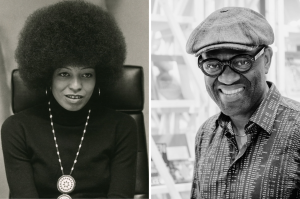
Brice Arsène Mankou sits down with Alain Mabanckou, author of Cette femme qui nous regarde. Angela Davis, l’Amérique et moi (Robert Laffont, 2024).
To join via Zoom, click here.
-
About the Edge of Sentience @ Room 1201, Department of Equity, Ethics & Health
16 h 00 – 17 h 30

The CRÉ is pleased to invite you to a book roundtable on Jonathan Birch’s The Edge of Sentience: Risk and Precaution in Humans, Other Animals, and AI (Oxford University Press, 2024).
Speakers:
Jonathan Birch (London School of Economics)
Stevan Harnard (Université du Québec à Montréal)
Jonathan Kimmelman (McGill)
Martin Gibert (Université de Montréal/CRÉ)
Chair: Virginie Simoneau-Gilbert (University of Oxford)
Book summary:
Can octopuses feel pain and pleasure? What about crabs, shrimps, insects or spiders? How do we tell whether a person unresponsive after severe brain injury might be suffering? When does a fetus in the womb start to have conscious experiences? Could there even be rudimentary feelings in miniature models of the human brain, grown from human stem cells? What about AI?
These are questions about the edge of sentience, and they are subject to enormous, disorienting uncertainty. The stakes are immense, and neglecting the risks can have terrible costs. We need to err on the side of caution, yet it’s often far from clear what ‘erring on the side of caution’ should mean in practice. When are we going too far? When are we not doing enough?
The Edge of Sentience presents a precautionary framework designed to help us reach ethically sound, evidence-based decisions despite our uncertainty.
-
Robin McKenna (University of Liverpool) @ Université du Québec à Montréal
10 h 00 – 12 h 00

On Friday, November 8, 2024, from 10:00AM to 12:00PM, Robin McKenna (University of Liverpool) will offer a lecture entitled “Doing Your Own (Patient Activist) Research”, organized by the Groupe de recherche interuniversitaire sur la normativité (GRIN).
The event will take place in room DS-1950 of Pavilion J.-A. De Sève, at the Université du Québec à Montréal (UQÀM), 320 Sainte-Catherine Street East. The conference will also be presented on Zoom.
This talk is about the author’s work in progress. If you wish to access the article in question, please contact us at grin.normativity@gmail.com.
Abstract
The slogan “Do Your Own Research” (DYOR) is often invoked by people who are distrustful, even downright sceptical, of recognized expert authorities. While this slogan may serve various rhetorical purposes, it also expresses an ethic of inquiry that valorises independent thinking and rejects uncritical deference to recognized experts. This paper is a qualified defence of this ethic of inquiry in one of the central contexts in which it might seem attractive. I use several case studies of patient activist groups to argue that these groups often engage in valuable independent research that advances biomedical knowledge. In doing so they demonstrate the value of “lay expertise” and the epistemic as well as political necessity of not simply deferring to recognized experts. I also give some reasons why patient activist groups often produce valuable biomedical knowledge: they are examples of what I call “research collectives”. Research collectives are research communities that differ from the traditional research communities we find in universities and research institutes in that their members typically lack formal relevant scientific credentials and training. But they are similar in that they have internal structures—training procedures, norms of discussion, venues for holding discussions—that facilitate the production of knowledge. I finish by suggesting that future research into the differences and similarities between research collectives and traditional research communities is required.
-
Mariam Thalos (University of Tennessee) @ McGill University
10 h 00 – 12 h 00
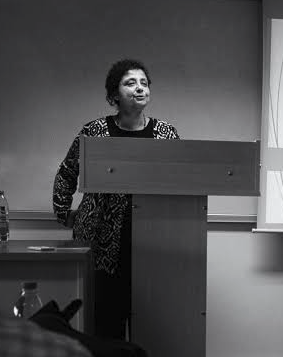
On Friday, November 1, 2024, from 10:00AM to 12:00PM, Mariam Thalos (University of Tennessee) will give a lecture entitled “Reasoning in Context”.
The event will take place in Room 738 of the Leacock Building, located at 855 Sherbrooke Street, McGill University. To participate via Zoom, click here.
The conference is organized by the Groupe de recherche interuniversitaire sur la normativité (GRIN).
Abstract
The concept of intelligence has been difficult to get one’s arms around. Surprisingly, the same can be said also of the notion of reasoning. This talk aims at shedding some light on certain aspects of human reasoning – reasoning for practical life. This will put us in a better position to make some comparisons between (some aspects of) human reasoning, and what Large Language Models (LLMs) are doing – they look to be doing quite different things. Reasoning, at least as humans do it, involves architecture that Computer Science has apparently abandoned for the current generation of AI models. By articulating an account of the machinery required for reasoning, we will be able to pose questions about how human reasoning operates collective settings as well as in individual settings.
-
Mary Kate McGowan (Wellesley College) @ McGill University
15 h 00 – 17 h 00
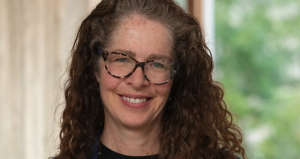
On Monday, October 28, 2024, from 3:00PM to 5:00PM, Mary Kate McGowan (Wellesley College) will offer a lecture entitled “On Silencing, Miscommunication, and Silence”.
The seminar will take place in Room 927 of the Leacock Building, located at 855 Sherbrooke street, McGill University.
The event is co-sponsored by the Centre de Recherche en Éthique (CRÉ) and McGill’s Department of Philosophy.
-

On Wednesday, October 23, 2024, from 12:00PM to 1:30PM, Emily M. Bender (University of Washington) will give a seminar entitled “Sense-making with artificial interlocutors and risks of language technology”, for the Doctorate in Cognitive Computing (DIC) program at the Université du Québec à Montréal (UQÀM).
To participate via Zoom, click here.
The seminar is co-sponsored by the Centre de Recherche en Éthique (CRÉ), in collaboration with the Cognitive Science Institute (ISC), the Doctorate in Cognitive Computing (DIC) program, and the Research Centre for Artificial Intelligence (CRIA) at UQÀM.
Abstract
Humans make sense of language in context, bringing to bear their own understanding of the world, including their own model of their interlocutor’s understanding of the world. In this talk, I will explore various potential risks that arise when humans bring this sense-making capacity to interactions with artificial interlocutors. What happens in conversations where one interlocutor has no access (or extremely limited access) to meaning and all the interpretative work instead rests with the other interlocutor? I will briefly explore what this entails for the design of language technology.