“Beyond listening: epistemic conflict in anorexia nervosa and the participatory solution”
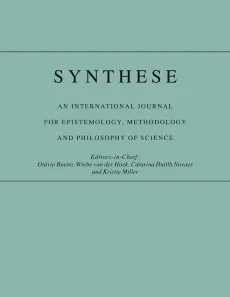
Anne-Marie Gagné-Julien (Laval University), Ian Gold (McGill University), Mona Gupta (CHUM), Sarah Arnaud (CÉGEP Édouard Montpetit) and Luc Faucher (Université du Québec à Montréal) publish a new article entitled “Beyond listening: epistemic conflict in anorexia nervosa and the participatory solution” in Synthese, in collaboration with their colleagues Owen Chevalier, Shannon Mahony and Lindsay Bodell.
Abstract
Recent philosophical literature has called for more participatory approaches in psychiatric research, advocating for the inclusion of patients and other stakeholders in processes ranging from the classification of mental disorders to the evaluation of treatment standards. While the dominant scientific paradigm continues to emphasize statistical rigor and methodological control, this approach often fails to accommodate the complexities of psychiatric phenomena, particularly as experienced by those diagnosed with mental disorders. There is growing recognition that participatory methods—when implemented robustly—can offer epistemic advantages by incorporating forms of knowledge that are otherwise marginalized or excluded. This paper examines the epistemic case for participatory psychiatry through the lens of anorexia nervosa (AN), a condition in which patients’ first-person reports may diverge from clinical frameworks. We argue that these divergences are epistemically significant—they reveal structural gaps in current models of understanding AN—and evidence of the value for a social objectivity framework for psychiatry. Drawing on recent work in the philosophy of psychiatry, we assess how alternative philosophical approaches, that seek to redefine objectivity and the epistemic value of lived experience, can be appropriate for the AN case.