
“Public Reason in Political Tolerance”
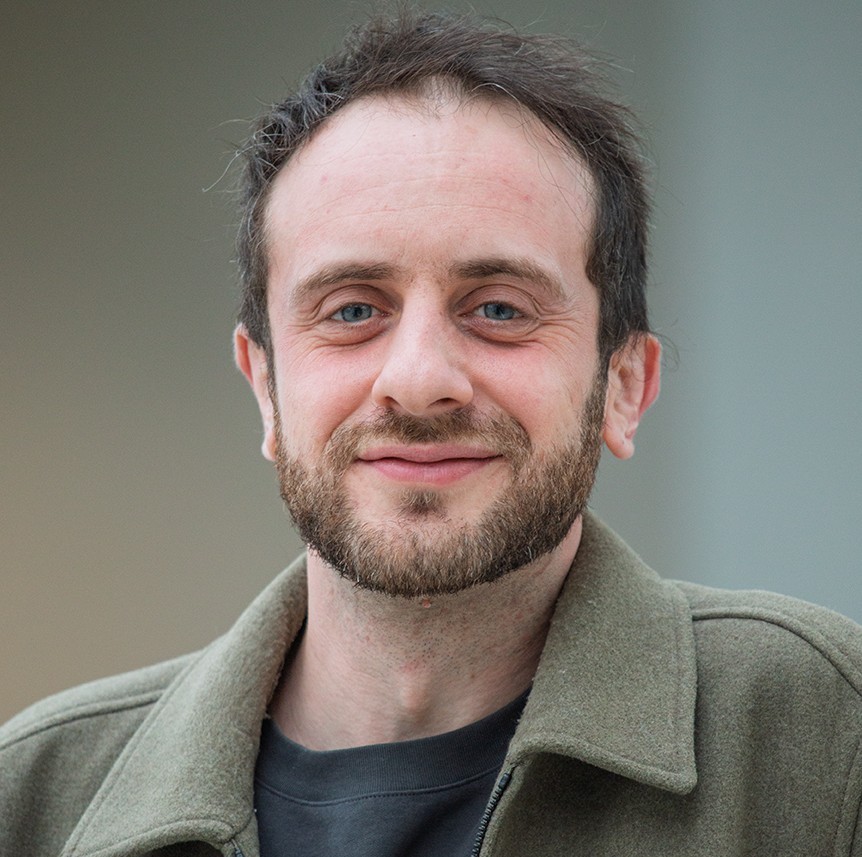
Lecture by Yoann Della Croce (University of Geneva)
On Tuesday, May 26, 2026, from 2:00 p.m. to 3:30 p.m., Yoann Della Croce, researcher at the University of Geneva, will give a lecture titled “Public Reason and Political Tolerance.” The event will take place in room 102 of McGill’s Presbyterian College, located at 3690 Peel Street, Montreal, Quebec.
With the participation of Daniel Weinstock (McGill University), Ryoa Chung (University of Montréal) and Naïma Hamrouni (Université du Québec à Trois-Rivières).
Abstract
According to the Rawlsian ideal of public reason, political elites and citizens should, when discussing and deciding on fundamental questions of justice, refrain from reasoning in terms of their own conceptions of the good life and instead ensure that they reason in terms of shared values accepted by all citizens. This paper assesses whether this standard of justification (i.e. public reason) relies on overly optimistic assumptions about the ways in which citizens and elected officials perceive fundamental rights of political organization (i.e. constitutional essentials). We fielded an original set of survey items to elicit evaluations of various reasons for political intolerance from citizens and elected representatives in seven liberal democracies. Our findings reveal a substantial gap in how politicians and citizens justify political intolerance. Although citizens evaluate the reasons more uniformly than politicians, both groups distinguish clearly between public and nonpublic reasons and are significantly more likely to prioritize public reason. These results strongly support some of the behavioral assumption of Rawlsian strands of liberal theories of justice.
Speaker’s Biography
Yoann Della Croce is a postdoctoral researcher at the University of Geneva working at the interface of political theory and bioethics. After being awarded his PhD in political theory from the University of Geneva, he went on to do postdoctoral fellowships at McGill University and ETH Zürich. His main research interests include end-of-life ethics, epistemic injustice theory, the ethics of novel neurotechnologies, relational egalitarianism, and citizenship theory. He also serves on the editorial board of the American Journal of Bioethics: Neuroscience. He is currently working on an Swiss National Foundation for Science-funded project on citizenship theory and illness.